
Casinos That Accept Direct Banking: UK Payments
 Available in GB

See how Open Banking differs from a conventional transfer and what to consider when comparing casino payment routes.
Table of Contents
- How Open Banking Connects a Casino to a Bank Account
- Payment Ownership Checks and Fraud Controls
- Instant Deposits, Withdrawals and Bonus Conditions
- Comparing Direct-Banking Costs
- Checking Whether a Casino Supports Direct Banking
- Deposit Amounts and Account Limits in UK Casinos
- Payment Methods Beyond Open Banking
- Why Direct-Banking Withdrawals May Not Be Instant
- Direct Banking and GamStop Status
- Using One Bank Account Consistently
- Banking Options and Payment Methods at Lucki Casino
How Open Banking Connects a Casino to a Bank Account
Open Banking is a way for a payment service to connect a casino payment to a customer’s bank account, with the customer authorising the transaction through their bank. It is not simply another name for every bank transfer. The distinction is chiefly in how the payment is started and authorised: an Open Banking payment is arranged through a service that communicates with the bank, while a conventional transfer is generally set up directly in the bank’s own app or online banking.
At a casino cashier, the payment route may begin with selecting a bank payment option and entering the amount. The service then passes the payment request to the bank for authorisation. The bank’s own authentication process is used to approve it; the casino is not the bank’s payment interface. Once authorised, funds move from the bank account towards the casino through the payment route involved. The exact screens and steps depend on the casino, payment service and bank.
The term “Open Banking” can describe more than one kind of connection. In a gambling payment context, it commonly refers to a payment initiation service: a service that allows a payment to be requested from a bank account after approval. The phrase does not, by itself, identify a single provider or guarantee that every casino uses the same process. Nor does seeing a bank’s name in a payment flow establish that the casino has a direct technical connection to that bank. A service may sit between the casino and the bank to pass the payment request along.
When choosing a casino that accepts direct banking, payment processing is worth considering alongside the games and overall experience. This list highlights the payout timeframe provided for each operator.
1. NightLuck
Payout speed: 1-3 business days NightLuck lists a payout timeframe of 1–3 business days.
2. Britsino
Payout speed: 1-3 business days Britsino lists a payout timeframe of 1–3 business days.
3. Jetsetspins
Payout speed: 1-3 business days Jetsetspins lists a payout timeframe of 1–3 business days.
4. Chanze
Payout speed: 1-3 business days Chanze lists a payout timeframe of 1–3 business days.
5. BeOnBet
Payout speed: 1-3 business days BeOnBet lists a payout timeframe of 1–3 business days.
6. Amunbet
Payout speed: 1-3 business days Amunbet lists a payout timeframe of 1–3 business days.
7. SlotoSport
Payout speed: 1-3 business days SlotoSport lists a payout timeframe of 1–3 business days.
8. EvoSpin
Payout speed: 1-3 business days EvoSpin lists a payout timeframe of 1–3 business days.
9. WinBeast
Payout speed: 1-3 business days WinBeast lists a payout timeframe of 1–3 business days.
10. Revery Play
Payout speed: 1-3 business days Revery Play lists a payout timeframe of 1–3 business days.
A conventional bank transfer has a different starting point. The payer logs in to their bank and arranges a transfer, often by entering the recipient’s details and the amount there. With an Open Banking flow, the payment request is presented from the casino or its payment service, and the bank is then used to authorise it. Both routes involve a bank account and can result in money being transferred between accounts, but the initiation process is not identical.
That difference matters when a payment option is described loosely as “bank transfer”. A cashier may use broad wording for a bank-based method even when the transaction is initiated through an Open Banking service. Conversely, the presence of a bank transfer option does not necessarily mean that an Open Banking payment service is being used. The label alone may not reveal the technical route; the payment steps shown in the cashier are more informative.
An Open Banking payment also should not be confused with giving the casino a bank username or password. The authorisation takes place through the bank’s authentication process. The precise way this is presented can differ, so the relevant distinction is where approval occurs and what service is handling the request—not merely whether a bank logo appears on screen. A payment flow that asks for sensitive banking details outside a bank-authorised process should not be treated as equivalent simply because it is described as direct banking.
For a UK player, the practical description “casino that accepts Open Banking” therefore refers to a casino whose cashier offers an account-to-account payment route using an Open Banking service. It does not mean that the casino holds the bank account, nor that the casino can freely initiate payments without approval. The customer remains involved in authorising the payment through the bank. The bank’s response and the payment service’s handling of the request form part of the overall route.
TRON TRX Casino Comparison for the UK
Open Banking can make a bank payment feel more integrated with the casino cashier than a manually arranged transfer, but the underlying source of funds remains a bank account. The casino requests a payment; the customer authorises it with the bank; and the payment is then processed through the relevant service. A conventional transfer instead begins with the payer arranging the transaction in their banking service. This is a useful distinction when comparing the labels used for payment methods, without assuming that all providers implement the route in the same way.
A specialist review has described Open Banking and bank transfers as capable of supporting instant deposits and fast withdrawals at many sites. That is a reported possibility, not a guarantee attached to the term itself. The payment route explains how funds may be requested from a bank account; it does not establish the time a particular casino will take to process a transaction. Nor does “Open Banking” alone indicate whether the same route is available for both deposits and withdrawals. Those details depend on the casino’s cashier and payment arrangements.
Payment Ownership Checks and Fraud Controls
For an online casino using Open Banking, payment ownership is a separate question from whether the banking route is technically available. The relevant issue is whether the customer account, bank account and payment instruction can reasonably be associated with the same person. When those details align, basic ownership questions are less likely to create avoidable friction. When they do not, a transaction may need closer review.
This is not a guarantee that a payment will be accepted or that further checks will be unnecessary. An Open Banking connection does not, by itself, settle every question about who controls an account or whether a transaction fits the casino’s requirements. It provides a way to initiate a payment through a bank, while the casino remains responsible for assessing the associated account activity under its controls.
Why ownership alignment matters
Payment checks help remote gambling licensees manage the risk that funds are being moved through an account unrelated to the customer. A mismatch between the name on a casino account and the details associated with a payment route may therefore require clarification. Even where the explanation is legitimate, the difference can make a transaction less straightforward to assess.
Casinos That Accept Dogecoin in the UK: Evidence
The same principle applies when a customer’s account information is incomplete or does not correspond with the payment details supplied. A consistent set of details gives the operator a clearer basis for associating the transaction with the account holder. It reduces the chance that a basic discrepancy becomes an obstacle, although it does not remove the possibility of additional KYC checks.
Open Banking should not be treated as a substitute for accurate casino account information. Nor does using it mean that every payment will pass without review. Ownership checks concern the relationship between the parties and accounts involved; the payment method alone cannot establish that every detail is correct.
Returning funds to the original source
A common anti-fraud and anti-money-laundering control is to return funds to the source from which they were deposited. This closed-loop approach helps preserve a traceable connection between the incoming payment and any later return of funds. It is one reason the route used to make a deposit can matter beyond the initial transaction.
Where a return to the original source is not possible or an alternative route is requested, further verification may be required. The operator may need to establish that the alternative account is controlled by the same customer and that the change is consistent with its procedures. The need for extra checks does not, on its own, indicate wrongdoing; it reflects the additional uncertainty created when the payment path changes.
A casino’s terms can set out how it handles returns and what happens if the original route cannot be used. Those rules are relevant to Open Banking casinos as well as to other payment methods. A customer should not assume that a different bank account can be substituted without review merely because it belongs to the same person.
What can cause avoidable friction
Differences in personal details can make it harder to match a payment to a casino account. A name entered differently, outdated account information or an instruction made through another person’s account can all weaken the straightforward link between customer and payment route. These examples do not establish that every operator treats each mismatch in the same way; they illustrate why consistent ownership information matters.
Do
- Ensure the casino account name matches the bank account name
- Use a consistent set of personal details
- Use the same named bank account for deposits and withdrawals
Don’t
- Provide sensitive banking details outside a bank-authorised process
- Use another person’s bank account for payments
- Use outdated account information that differs from payment details
There is also a distinction between the account holder and someone who may have access to an account. Access alone does not make another person’s bank account an appropriate route for a casino payment. A payment made from an account that cannot readily be connected to the casino customer may prompt questions, even if the customer had permission to use it.
For this reason, the simplest arrangement is one in which the casino account and payment route identify the same customer. This is a practical way to reduce avoidable ambiguity, not a promise of a friction-free transaction. Operators can still apply checks where required by their own procedures or where the activity needs further assessment.
A cautious view of Open Banking checks
Open Banking can make the payment route more directly associated with a bank account, but it should not be interpreted as a universal identity certificate. The operator’s checks and the bank’s role are distinct, and a successful payment instruction does not necessarily mean that every casino account requirement has been satisfied.
For a UK Open Banking casino, ownership alignment is therefore best understood as a risk-control consideration rather than a special benefit unique to one payment method. Matching details can make the transaction easier to interpret; a mismatch or change of route can lead to questions and, in some cases, additional verification. This is why payment consistency matters to the assessment of a transaction, even when the underlying banking service is functioning normally.
Casinos that accept Litecoin in the UK: what to check
Instant Deposits, Withdrawals and Bonus Conditions
Open Banking can make a casino deposit appear in the account quickly, but the timing should not be treated as a fixed feature of every direct-banking payment. Specialist casino reviews report that Open Banking and bank transfers can support instant deposits and fast withdrawals at many sites. That is a qualified description of reported availability, not a guarantee for every operator, bank or transaction. The payment route shown in a casino’s cashier, and the terms attached to it, determine what is available in a particular case.
The word “instant” also needs to be read narrowly. It may describe how quickly a deposit is credited, rather than every stage of a payment from the bank account to the casino balance. A delay or interruption can still arise outside that description, and a fast deposit does not establish that a withdrawal will be equally fast. Withdrawal timing also depends on the casino’s approval process and the account’s verification status. A payment method’s deposit speed, therefore, is not evidence of a matching payout speed.
Speed and the payment route
For a player considering an Open Banking instant deposit at a UK casino, the relevant distinction is between a payment method’s potential and the service available at a specific site. A specialist review may describe direct banking as fast, but that does not settle whether a particular casino offers the same route to every customer or processes each transaction at the same pace. “Instant” is best understood as a reported possibility, not an unconditional service standard.
Bank transfers and Open Banking are also not interchangeable labels for every payment experience. A casino may present a particular banking option through its cashier, while its processing and the customer’s bank determine how the transaction proceeds. The practical point is that a general statement about fast banking payments cannot establish the timing of a named transaction. Where an exact processing time matters, only the operator’s current payment information can speak to that service.
Attention: A fast deposit speed does not guarantee that a withdrawal will be equally fast, as payouts depend on the casino’s internal approval and verification process.
The same distinction applies to withdrawals. Specialist casino reviews describe Open Banking and bank transfers as capable of supporting fast withdrawals at many sites, but this does not remove the operator’s internal review stage. A casino may need to approve a payout before it is sent, and verification can affect the process. A rapid deposit should not be taken as proof that a withdrawal will arrive immediately.
Bonus eligibility is a separate question
Payment speed does not determine whether a deposit qualifies for a bonus. An Open Banking casino may offer a promotion, but the existence of a banking option does not establish that deposits made through it are eligible. Eligibility depends on the operator’s terms for the specific offer and payment method. The cashier’s speed and the bonus rules address different parts of the transaction.
This matters when assessing searches for an Open Banking casino no-deposit bonus or free spins. Those phrases describe promotional offers, not properties of Open Banking itself. A no-deposit offer is not created by choosing a payment route, and free spins are subject to the promotion’s own conditions. Without a specific offer and its current terms, no general claim can be made that direct-banking users will receive either benefit.
PayPal illustrates the same separation. A specialist casino review describes the method as popular for speed and convenience, while noting that it may be excluded from bonus eligibility. That observation concerns reported promotion rules, not a universal condition for all casinos or offers. It should not be transferred automatically to Open Banking: each operator’s stated terms determine which payment methods qualify.
For any direct-banking deposit linked to an offer, the relevant evidence is the offer’s wording, including any listed payment-method exclusions. A fast payment can be useful without being bonus-eligible; conversely, bonus eligibility does not establish a particular deposit or payout speed. Treating these as separate questions avoids confusing a payment feature with a promotional entitlement.
Comparing Direct-Banking Costs
The cost of a direct-banking casino payment cannot be judged from the cashier’s displayed fee alone. A specialist payment review identifies several possible charges: those set by the casino, the payment provider, the bank or card issuer, and, where relevant, the network. Currency conversion can add another cost through the exchange-rate spread. Which charges apply depends on the transaction and the parties handling it.
Casinos That Accept Wirecard in the UK: What to Check
A payment may appear to have no flat charge while still costing more through conversion. A specialist review notes that the exchange-rate spread can exceed a visible fee. The comparison therefore needs to account for the amount leaving the bank account and the amount credited to the casino balance, rather than treating a zero-fee label as proof that the transaction is cost-free. If both sides of the payment use the same currency, conversion may not be involved; if they do not, the rate used becomes part of the effective cost.
Direct banking is not automatically cheaper than another payment route. A specialist review of payment costs cautions that there is no single method that has the lowest fees in every case. The relevant comparison is between the casino’s charge, any provider or bank fee, the currency spread and any network cost for the particular transaction. These components may differ between methods, so a general claim that Open Banking is the cheapest choice would not establish what a particular payment will cost.
For a casino that accepts direct-banking deposits, the practical comparison is to check the payment details at the point of payment and identify which party applies each charge. A casino fee and a bank fee are not the same thing, and a conversion rate may affect the final value without appearing as a separate line item. The cashier’s terms and the bank or provider’s payment information should be considered together where both are available.
A useful comparison uses the same intended transaction amount across the available routes. It should record any stated charge and whether the payment involves a currency conversion, then consider the rate offered for that conversion. This does not require assuming that a particular direct-banking casino site has a fixed price for all customers: fees and rates may be tied to the payment route and transaction circumstances. Where the cost components are not clearly disclosed, the total cannot be established from a headline fee alone.
Casinos That Accept Debit Cards in the UK
The same approach applies when comparing direct banking with cards or e-wallets. A method with a visible charge may still cost less overall than one with a less transparent exchange rate; the reverse may also be true. The evidence needed is the total cost for the actual amount and route, not a broad ranking of payment methods. This makes it possible to compare options without treating “no fee” as synonymous with “no cost”, or assuming that a casino’s preferred payment option is necessarily the least expensive.
Checking Whether a Casino Supports Direct Banking
Payment availability should be confirmed in the casino’s cashier rather than inferred from a general list of banking options. A payment page may describe a method broadly, while the options shown for a particular account can be more specific. For direct banking, the relevant check is whether the cashier offers the bank-linked route being considered, not simply whether it mentions bank payments.
Open Banking and a standard bank transfer are not interchangeable labels. A cashier that displays a bank-transfer option has not necessarily confirmed that an Open Banking service is available, and a general reference to direct banking does not establish which route can be used. The payment method shown at the point of deposit is the more useful indication of current support. If the label or process is unclear, the operator’s payment information can clarify what the option means before a transaction is started.
Availability can also differ between payment products. A specialist review of casino payment pages lists Visa and Mastercard, but those references do not establish that every card product is currently eligible for use in the UK. The cashier should be checked for the specific card option available to the account. Credit-card payments for gambling are not permitted at UK-licensed casinos; a card listing should not be read as permission to use a credit card.
Currency is another compatibility detail. A specialist review reports GBP support on the pages it examined, but that does not confirm the account currency for every casino or every customer. The currency selected or assigned to the casino account should be checked before the first payment. If the account is denominated in a different currency, the transaction may involve conversion rather than being processed in pounds sterling.
Checking Payment Compatibility
- Locate the exact payment option in the logged-in cashier
- Confirm the bank-linked route is available for the account
- Verify that the account currency is correct (e.g., GBP)
- Check for specific card product eligibility if applicable
These checks are separate: a payment method may appear in the cashier while the account currency still needs confirmation. Conversely, an account showing GBP does not prove that a particular direct-banking service is available. Treating them as independent details avoids relying on one piece of information to answer a different question.
A practical compatibility check is therefore to look for the exact payment option in the logged-in cashier, confirm that it is available for the account, and verify the account currency before proceeding. General payment summaries can help identify methods worth checking, but they are not a substitute for the current cashier display. This is particularly relevant when a page refers to cards or bank payments in broad terms: the exact method and its availability should be established at the point where the deposit would be made.
Deposit Amounts and Account Limits in UK Casinos
Deposit thresholds and maximums are separate controls. A minimum deposit is the smallest amount accepted for a particular transaction, while a maximum may apply to an individual payment or to the total deposited over a stated period. At a casino offering direct banking, these figures should be read as conditions of the selected payment route and account, rather than as one fixed limit applying to every customer.
A specialist casino review places some minimum deposits in the £10–£20 range, with the precise threshold depending on the payment method. That figure is a guide to the range reported by that type of source, not a universal requirement for every UK casino or every direct-banking transaction. The cashier’s displayed minimum is the relevant amount for a specific account and method. A payment below it may not be accepted, even if another route at the same casino allows a smaller deposit.
Maximums can be structured differently. A casino may set a ceiling for each transaction as well as separate daily or monthly totals. Specialist casino reviews report that these maximums can change according to the payment method and the status of the account. Consequently, a limit shown for one customer or route should not be treated as a general cap across the site. The terms displayed during the deposit process are the appropriate place to confirm the applicable amount.
Casinos That Accept Bitcoin in the UK: What’s Known
Account status can matter because a casino’s permitted transaction range may depend on the account’s circumstances. The stated limit is therefore not necessarily determined by the banking method alone. If a deposit is rejected or an expected amount cannot be entered, the transaction ceiling shown in the cashier and the account’s own controls are distinct details to check; neither should be assumed from another casino’s rules.
There is also a separate regulatory requirement concerning personal financial limits. Remote gambling operators must ask new customers to set a financial limit before they make their first deposit, and account-level controls must remain accessible. This is not the same as a payment method’s minimum or maximum. A minimum describes what a transaction must reach; a maximum constrains what the payment route or account will accept; a financial limit is a customer-level control intended to manage gambling expenditure.
These distinctions matter when choosing a deposit amount. The cashier can show the payment threshold and transaction ceiling, while the account interface provides the personal limit controls. Those figures serve different purposes and should not be conflated: a payment maximum does not itself set a customer’s financial limit, and a personal limit does not establish the minimum accepted by a particular method.
Casinos That Accept Diners Club in the UK
Payment Methods Beyond Open Banking
Open Banking is one route for funding a casino account, but it is not the only one. In the UK, debit cards are commonly accepted, including Visa and Mastercard. Some UK Gambling Commission-licensed casinos also accept Apple Pay for deposits. These options give a useful point of comparison with an instant banking casino payment, although the methods available depend on the individual casino.
Deposit acceptance does not establish that a method can also be used to receive a withdrawal. This distinction is particularly clear with Paysafecard: it is a prepaid voucher for deposits only, not a payout route. A casino may therefore require another supported method when returning funds. The cashier’s payment information should be checked for both directions before a method is treated as suitable for managing the full payment cycle.
Cards and Apple Pay should be assessed on the same basis. Their appearance as deposit options does not, by itself, confirm that withdrawals can be sent back to them. Availability may also depend on the specific card product or account configuration. Where a payment method is listed for deposits but not withdrawals, the casino’s stated payout process determines what alternatives are available.
Banking Options and Payment Methods at Lucki Casino
This makes the comparison with Open Banking more practical than a simple ranking of methods. Direct banking describes a way to make a payment through a bank account; debit cards, Apple Pay and prepaid vouchers are distinct options, each with their own acceptance conditions. Labels such as “instant deposit” or “fast withdrawal” should not substitute for checking the casino’s stated support for the relevant transaction.
The main distinction is therefore between funding an account and receiving money from it. Paysafecard is deposit-only, while the presence of a card or mobile-wallet option does not prove that it supports both deposits and withdrawals at a particular casino. For any method, the cashier is the relevant place to confirm its current role. This avoids treating a deposit option as a complete payment solution and keeps comparisons with Open Banking focused on what the casino actually permits.
Why Direct-Banking Withdrawals May Not Be Instant
A deposit made through direct banking can reach a casino quickly without setting the pace for a later payout. A withdrawal is subject to a separate process: the casino must review and approve it, and the account must be fully verified before the funds can be released. The payment route therefore cannot, by itself, establish when money will arrive.
Specialist casino reviews report that withdrawal processing time includes the operator’s internal approval stage. This distinction matters when a cashier describes a payment method as fast or instant: that wording may relate to deposits, or to the transfer after approval, rather than to the full period from requesting a withdrawal to receiving it. The stages should not be treated as interchangeable.
Verification can add time, particularly when a first withdrawal is being processed. If the account is not yet fully verified, the casino may need to complete checks before approving the payout. Later withdrawals may follow a different path once those checks have been completed, although the timing still depends on the operator’s procedures. A pending withdrawal should therefore not automatically be interpreted as a problem with the bank connection.
Verification can add time to the process, particularly when a first withdrawal is being processed, as the casino may need to complete checks before approving the payout.
Specialist reviews also note that payment speed can differ between directions: a card deposit may be instant while a payout takes several business days. That comparison illustrates why an immediate deposit is not evidence of an equally quick withdrawal. For direct banking, the relevant question is not only how funds enter the casino account, but how long the casino takes to review and release a payout.
Descriptions such as “instant withdrawal” need to be read with care. They do not establish that every request will be approved immediately or that the money will appear in the bank account at once. Account verification and the casino’s internal processing remain part of the timeline. Where an operator gives a processing estimate, it is important to distinguish the time before approval from the onward transfer time; a stated estimate may refer to only one of those stages.
The available evidence supports a conditional conclusion rather than a universal timing claim. Direct banking may support fast movement of funds, but a fast deposit does not guarantee a fast withdrawal. Approval procedures and verification status can affect the payout, so instant deposits and instant withdrawals are not equivalent measures of performance.
Direct Banking and GamStop Status
Direct banking describes how money moves between a casino account and a bank account; it does not establish whether a casino participates in GamStop. The presence of instant banking, or any other payment option, is not evidence that a site is outside the UK self-exclusion scheme. Payment facilities and self-exclusion arrangements are separate matters.
Searches for a direct-banking casino not on GamStop often combine two distinct questions: which payment methods a casino accepts, and whether it falls within the relevant regulatory and self-exclusion framework. The payment method alone cannot answer the second question. Nor does the label “non-GamStop” establish that a casino is authorised to serve customers in Great Britain. Remote gambling licensees serving that market must hold a UK Gambling Commission licence.
Account-level financial controls are also distinct from GamStop. UKGC rules require remote gambling licensees to prompt new customers to set a financial limit before their first deposit and to make account-level limit controls accessible. These controls concern limits on an account; they do not indicate whether a person is registered with GamStop or whether a particular casino is included in the scheme.
Casino Sites That Accept Jeton in the UK
Consequently, direct banking should not be treated as a way to identify a casino’s GamStop status. The payment route provides no reliable basis for inferring that status, and a fast or instant deposit does not change that. Any assessment of a casino’s regulatory position should be kept separate from the choice of banking method.
Using One Bank Account Consistently
Using one named bank account for deposits and withdrawals can make casino payment activity easier to follow. In a direct-banking casino, the account selected for a deposit can also provide a clear reference point when a payout is requested. A consistent route reduces the need to manage several accounts or keep track of which one was used for a particular transaction.
This approach is practical rather than a promise of faster processing. A casino may still apply its own procedures before releasing funds, and the payment route shown in the cashier remains relevant. Keeping the same account in use does not remove those steps; it simply makes the payment arrangement more straightforward.
The same principle applies when comparing direct-banking casinos. A payment option can appear under a familiar banking label while the actual account choices or payout routes differ between casino cashiers. The selected account should therefore be recorded alongside the transaction, rather than assuming that every service described as casino direct banking works identically.
For account management, a single named account can also make deposits and withdrawals easier to review against bank statements. It provides a coherent record of casino-related transfers without requiring a separate account for each payment method. This does not establish that one route is suitable for every customer, nor that every casino will return funds through the exact channel initially selected. The useful distinction is between consistency as a simple organisational choice and a guarantee about how a particular transaction will be handled. A top direct-banking casino cannot be identified on this basis alone; the cashier’s stated options still determine which account can be used.
Why must withdrawals return to the deposit method?
Returning winnings to the original payment source is a common anti-fraud and anti-money-laundering control. Using another source may require extra verification.
What is the fastest withdrawal method for UK casinos?
PayPal, Open Banking services and debit cards linked to fast payout systems are generally among the quickest. The casino’s approval process and your verification status also affect how soon you receive the money.
Do UK casino withdrawals require verification?
Verification may be needed, and a first withdrawal can take longer while checks are completed. Having a fully verified account can help avoid delays.
Why can a fast payout casino still delay my withdrawal?
A casino’s internal approval and verification checks can delay payment, particularly for a first withdrawal. Bank cut-off times, weekends and currency conversion can also affect delivery.
Are fast casino withdrawals guaranteed?
No. Even with a fast payment method, the casino’s approval process and your verification status affect the timing.
Which payment methods are accepted in Great Britain?
Common options include Visa and Mastercard debit cards, PayPal, Open Banking and bank transfers. Some casinos also offer Skrill, Neteller, Paysafecard, Apple Pay or Jeton; availability varies, so check the cashier.
Can I deposit in GBP?
Yes, GBP is supported, but check your account currency before depositing to avoid conversion costs.
Banking Options and Payment Methods at Lucki Casino
Cryptocurrency Deposits and Withdrawals at Lucki Casino
Lucki UK GuideIndependent editorial guide for UK readers Lucki crypto payments - UK, 2026 Current...
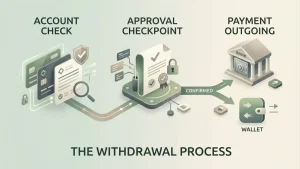
Payout Speeds and Lucki Casino Withdrawals
Lucki UK GuideIndependent editorial guide for UK readers Lucki withdrawals - UK, 2026 Lucki's current...

Anonymous Crypto Casinos in the UK: How They Work
A practical look at crypto payments, verification limits, wagering conditions and the risks of offshore...

Best Instant Withdrawal Casinos UK: Payout Speeds
A practical look at withdrawal processing, payment methods, verification checks and the terms that can...

BNB Casino Comparison in the UK: Licence Rules
BNB acceptance is not evidence of a UK licence, and the available information does not...

Bitcoin Cash Casino Comparison for UK Players
Bitcoin Cash casino options sit outside the British licensed market, so operator checks, bonus terms...

Cardano casino comparison in the UK: rules and evidence
The comparison separates evidence about ADA payments and casino claims from the licensing rules governing...

Casino Not on GamStop Instant Withdrawals Explained
A withdrawal's total journey can depend on casino processing, verification, payment method and any conditions...

UK Casino Sites That Accept Credit Cards: The Rules
The UK ban covers credit-card funds used for gambling, including payments routed through money service...

UK Casino Sites That Accept Debit Cards
Acceptance depends on each casino’s payment arrangements, while deposits and withdrawals may follow different processes....

UK Casino Sites That Accept EcoPayz: What to Check
EcoPayz availability can vary by account, so the live cashier and its displayed terms are...

Casino Sites That Accept Jeton in the UK
Jeton is reported at only a handful of UK online casinos, and acceptance can vary...

UK Casino Sites That Accept Skrill: Deposits and Payouts
Skrill's presence on a payment list does not confirm UK-account access; availability depends on the...

Casinos That Accept AstroPay in the UK: Payment Guide
AstroPay availability, transaction limits and promotion terms can vary, so general casino rules do not...

Casinos That Accept Bitcoin in the UK: What’s Known
The available reviews mention cryptocurrencies broadly, but do not confirm which assets individual casinos support...

Casinos That Accept CashtoCode in the UK
Casino cashier availability and promotion terms determine whether CashtoCode deposits are accepted and count toward...

Casinos That Accept Citadel in the UK: What Is Verified
Citadel acceptance is not established for a specific UK casino, and card listings or general...

Casinos That Accept Click2Pay in the UK
A cashier listing shows a possible funding route, while promotion terms separately determine whether a...

Casinos That Accept ClickandBuy in the UK: What to Check
ClickandBuy availability can vary by account, while payment options do not determine a casino’s slot...

Casinos That Accept Debit Cards in the UK
Learn how UK casino card deposits are handled, what can affect withdrawals, and which payment...

Casinos That Accept Diners Club in the UK
A general card-payment listing does not confirm Diners Club acceptance, and a deposit may not...

Casinos That Accept Dogecoin in the UK: Evidence
Payment availability, slot-bonus eligibility and withdrawal checks are separate questions, and each needs clear confirmation...

UK Casinos That Accept E-Wallets: Payment Guide
E-wallet availability can vary by casino and account, so payment compatibility matters from deposit through...

eCheck at UK Casinos: How to Verify Payment Support
Bank transfers, cards and e-wallets are distinct categories, so payment listings need specific confirmation before...

Casinos That Accept eCheque in the UK: What to Check
A bank-linked payment label is not proof of eCheque acceptance; check the operator’s listed methods...

Casinos That Accept Entropay in the UK: What to Check
Entropay availability is operator-specific, so payment listings, cashier options, fees and payout rules need separate...

Casinos That Accept Ethereum in the UK: Payment Guide
Ethereum support can vary by account and transaction, so the operator’s current payment menu is...

Casinos That Accept Giropay in the UK: Payment Guide
Giropay availability, promotion eligibility and withdrawal rules can differ, so check the cashier and the...

Casinos That Accept Google Pay in the UK
Payment availability, bonus terms and slot eligibility are separate questions, and a cashier listing alone...

Casinos That Accept iDEAL in the UK: What to Check
iDEAL availability, deposit minimums, bonus eligibility and withdrawal handling are separate checks, so payment branding...

Casinos That Accept Instadebit in the UK
Availability can vary by market and account, so the casino cashier is the relevant place...

Casinos That Accept Interac in the UK: Payment Guide
Interac availability, bonus terms and cashier listings are separate checks; a payment option alone does...

Casinos That Accept Klarna in the UK: What to Check
Casino payment options and slot catalogues are separate, so a listed game or card logo...

Casinos that accept Litecoin in the UK: what to check
The available evidence separates rules for casino play from payment availability and explains what to...

Casinos That Accept Maestro in the UK: What to Check
Maestro is a payment network, so its availability for deposits must be checked separately from...
Casinos That Accept Mastercard in the UK
A Mastercard card funds a casino account; the account balance, rather than the card, is...

Casinos That Accept MiFinity in the UK: What to Check
MiFinity availability, bonus terms, withdrawal routes and account ownership are separate checks when assessing a...

Casinos That Accept MuchBetter in the UK: Payment Guide
Slot access, cashier options and promotional terms are separate, so MuchBetter compatibility must be checked...

Casinos That Accept Neosurf in the UK
Payment availability, bonus eligibility and slot access are separate questions, and withdrawal support should not...

Casinos That Accept Neteller in the UK
The guide separates payment availability from promotion eligibility and outlines deposit, withdrawal and payment checks...

UK Casinos That Accept POLi: Payments and Checks
A payment option in the cashier does not guarantee bonus eligibility, so check the casino’s...

Casinos That Accept Revolut in the UK: Payment Guide
A casino may accept a deposit without confirming that it qualifies for an offer, so...

Casinos That Accept Ripple XRP in the UK: Payment Checks
A practical look at what payment listings can confirm, plus how XRP relates to bonuses,...

Casinos That Accept Tether in the UK: What to Check
A cryptocurrency listing alone cannot establish Tether support; operator-specific payment details and transfer conditions need...

Casinos That Accept Ukash in the UK: What to Check
A casino listing or general mention does not confirm that Ukash is available for deposits...

Casinos That Accept Upaycard in the UK: Deposit Checks
Upaycard availability is a deposit question; it does not confirm bonus eligibility, slot access or...

Casinos That Accept USDC in the UK: Payment Guide
A casino’s slot catalogue does not establish whether USDC deposits are supported or whether funds...

Casinos That Accept Visa in the UK: Deposits
A Visa card can fund a casino balance for real-money play, but the cashier options...

Casinos That Accept Wire Transfers in the UK
A bank-transfer label can describe different payment routes, so check the cashier’s options, account requirements...

Casinos That Accept Wirecard in the UK: What to Check
Wirecard availability depends on the casino cashier, while bonus eligibility and slot access follow separate...

Casinos That Accept Zimpler in the UK: What to Check
A cashier listing alone does not confirm bonus eligibility, slot use, withdrawal arrangements or compatibility...

Fast Withdrawal Casinos in the UK: How Payouts Work
A practical guide to payout timings, payment routes and checks, separating casino processing from the...

Instant Bank Transfer Casinos in the UK: How They Work
A bank transfer is an operator-specific cashier option, and its label alone does not establish...

iPad Casinos UK: Browser Access, Payments and Games
Compatibility depends on the operator’s site, its software, and the iPad’s browser and settings; payment...

Mobile Top-Up Casinos in the UK: How Payforit Works
See how Payforit funding is charged, what phone credit covers, and why deposits may not...

Pay by Mobile Casinos UK: Deposits and Bonus Rules
Paying by phone does not determine which slots are available; its main effect may be...

Pay by phone bill at UK casinos: payment steps
Payforit links a casino deposit to a mobile number and requires an SMS code to...
Pay by Phone Casinos UK: Deposits and Billing
Payforit uses a mobile account for deposits, with charges handled differently on monthly contracts and...

Payforit Mobile Casinos UK: Deposits and Payments
Follow the mobile-number and SMS-code payment flow, then review withdrawals, bonuses, limits and safety checks....

Quick Withdrawal Casinos in the UK: Payout Times
Payout speed covers the time from confirmed withdrawal request to funds arriving in the selected...

Same-Day Payout Casinos in the UK: How It Works
A clear look at when the clock starts, how payment methods affect arrival, and why...

TRON TRX Casino Comparison for the UK
The comparison separates UK licensing rules from offshore claims and explains what transaction and operator...

UK Crypto Casinos with No KYC: Rules and Limits
The guide explains UK licensing, BCH payment handling, bonus conditions, and what no-KYC registration does—and...

































































































































































































































































