No Account Casino UK: What the Label Really Means
 Available in GB

A no-account label describes how a casino presents sign-up, but does not establish what customer records or checks apply.
Table of Contents
- What “No Account” Means in a UK Casino
- Why a Site List Cannot Be Verified from the Available Evidence
- No-Account Claims and Checks Before Withdrawal
- How to Assess No-Account Casino Offers and Reviews
- Real-Money Play on Mobile: Deposits and Withdrawals Are Different
- What “Without an Account” Can and Cannot Establish
- Assessing New No-Account Casino Claims
- Free Spins Without a Deposit: Terms That Matter
- Trustly and the Difference Between Depositing and Cashing Out
- Paysafecard Searches and the Limits of Payment-Method Evidence
- Find Casinos
What “No Account” Means in a UK Casino
“ No account” is best understood as a description of how a casino presents its sign-up process, not proof that gambling takes place without an account. The phrase may refer to a service that avoids a conventional registration form or makes the initial steps feel more direct. That is different from playing without any customer record, and different again from being exempt from regulatory requirements.
The distinction matters because online casino play involves more than opening a page and starting a game. A business may use “no account” as a label for a particular route into its service, while still requiring a player to establish a relationship with the operator. The wording alone does not explain what information is collected, what account arrangements apply, or which checks may take place. Those details depend on the operator’s actual process and the rules governing its activity.
In ordinary use, an account is the customer relationship through which an operator administers access to gambling. A sign-up process can be brief or presented differently from a traditional form without changing the underlying nature of that relationship. Conversely, a claim that a service requires no account should not be treated as evidence that no account exists in a practical or regulatory sense. The promotional phrase is not a legal category that displaces the rules applying to remote gambling.
When considering a no-account casino option in the UK, it helps to check the practical details available before choosing. This list gives a brief reference point on payout timing.
1. NightLuck
Payout speed: 1-3 business days NightLuck lists payouts as taking 1–3 business days. That timing is the available detail to consider when assessing it.
2. Britsino
Payout speed: 1-3 business days Britsino lists a payout timeframe of 1–3 business days. This provides a clear timing detail for readers to weigh.
3. Jetsetspins
Payout speed: 1-3 business days Jetsetspins gives a payout speed of 1–3 business days. Its listed timing is the key available point for this reference.
4. Chanze
Payout speed: 1-3 business days Chanze lists payouts as taking 1–3 business days. This is the available practical detail about its payouts.
5. BeOnBet
Payout speed: 1-3 business days BeOnBet lists a payout timeframe of 1–3 business days. Readers can use that timing as one factor in their consideration.
6. Amunbet
Payout speed: 1-3 business days Amunbet gives a payout speed of 1–3 business days. That is the available information to note about payout timing.
7. SlotoSport
Payout speed: 1-3 business days SlotoSport lists payouts as taking 1–3 business days. Its stated payout timing is the main available point for this card.
8. EvoSpin
Payout speed: 1-3 business days EvoSpin lists a payout timeframe of 1–3 business days. This offers a specific timing detail for readers to consider.
9. WinBeast
Payout speed: 1-3 business days WinBeast gives a payout speed of 1–3 business days. That timing is the only available operator detail here.
10. Revery Play
Payout speed: 1-3 business days Revery Play lists payouts as taking 1–3 business days. This stated timeframe is the available point to weigh.
The regulatory framework is therefore a more reliable starting point than the marketing label. The UK Gambling Commission oversees gambling activity across the United Kingdom, including online casino gambling. For commercial gambling in Great Britain, it is the sole regulator. Its remit over remote gambling offered to consumers in Great Britain does not depend on where the operator’s key equipment is located. A company cannot avoid the relevant British requirements merely by locating its technical infrastructure elsewhere.
The Commission grants operating licences to businesses and personal licences to individuals who perform relevant roles in gambling operations. These are distinct forms of authorisation: an operating licence concerns the business providing gambling, while a personal licence concerns an individual working in the regulated system. For a remote operator serving consumers in Great Britain, the relevant Gambling Commission licence is required. A “no account” label does not create an exception to that licensing requirement.
This also explains why the words “online casino without account” need to be read cautiously. They can describe a sign-up experience, but they do not establish that the service sits outside the regulated system or that ordinary requirements cease to apply. Nor does a short route into a site, by itself, show whether the operator is authorised to serve Great Britain. The description and the operator’s regulatory position are separate questions.
No-ID Verification Withdrawals at UK Casinos
The phrase can also blur the difference between registering and accessing a game. A visitor may be able to view a site or reach a preliminary screen before completing all steps required to use its gambling service. That does not mean the person has been permitted to gamble on an unregistered basis. Similarly, an operator may avoid asking for a lengthy form at the outset while still managing customers through an account structure. What matters is the actual service and its terms, not the impression created by a headline.
This is why “casino with no account” should not be taken literally without further evidence. The claim may be shorthand for fewer visible sign-up steps, but it cannot establish the full process. A search for the best no-account casino does not change that standard: a ranking or promotional description cannot demonstrate that an account is absent, that checks are waived, or that an operator has the required licence. Each of those propositions would need support in its own right.
The same caution applies when the phrase is attached to free play. “Free online casino” can refer to games offered without real-money gambling, while a no-account label may refer to access or registration. These descriptions do not, on their own, define the legal or practical arrangement. The relevant distinction is whether the service is offering commercial gambling to consumers, and whether the operator is authorised for that activity in the relevant part of the market.
In short, “no account” is a marketing description whose meaning depends on the process behind it. It may indicate a simplified entry route, but it should not be read as proof of account-free gambling or freedom from regulation. In Great Britain, remote operators serving consumers remain subject to the Gambling Commission’s licensing framework, regardless of how their sign-up process is labelled.
Attention: The term "no account" is often a marketing label and does not mean the service is exempt from UK Gambling Commission licensing or regulatory requirements.
Why a Site List Cannot Be Verified from the Available Evidence
A directory of no-account casino sites implies more than a collection of names. It suggests that each entry has been checked against a defined standard and that the description applies to the operator, not merely to a phrase in an advertisement. Without that distinction, a list can make an unverified marketing claim look like an established feature.
The phrase “no account” is not, by itself, evidence of an operator’s regulatory status. Nor does a page describing a no-account casino establish that the business behind it is authorised to serve customers in Great Britain. Remote operators offering gambling to consumers in Great Britain need the relevant Gambling Commission licence. A site’s own description and its licensing position are separate matters.
That distinction matters when comparing a no-account casino list or a list of no-account casino sites. A directory may repeat wording used in promotions, reviews or other listings, but repetition does not verify the underlying claim. A label may describe a registration process, an advertised payment route or a particular offer. It does not independently establish what the operator provides or whether the operator holds the licence required for the British market.
What a verified directory would need to establish
A useful list would need to connect each entry to an identifiable operator and establish that the operator has the relevant Gambling Commission licence for serving consumers in Great Britain. The claim about account access would then need to be supported separately. A licence check does not prove that a casino offers a no-account option; equally, a no-account claim does not prove that the operator is licensed.
Casinos That Accept Monzo in the UK: What Is Known
This is why a list cannot be verified by collecting sites that use similar wording. The term needs an operational meaning, and each operator needs to be assessed against it. If those steps are skipped, a directory may mix different services under one heading, while giving the impression that they have been assessed on the same basis.
A search for no-account casinos may also lead to pages organised around other features, such as slots, bonuses or payment methods. Those features do not resolve the central question of which operator is responsible for the service or whether it is authorised to serve Great Britain. A casino’s catalogue or promotional language is not a substitute for checking its regulatory position.
Marketing labels do not establish licence status
A no-account casino bonus, for instance, is an offer description, not proof that the business making the offer is appropriately licensed. The same applies to a no-account deposit bonus or an advertised no-deposit bonus. Those phrases may explain how a promotion is presented, but they cannot establish the operator’s status. A bonus page should not be treated as a reliable basis for including a business in a directory of verified sites.
The same evidential limit applies to references to no-account slots or Bitcoin casinos. The game format or payment description does not demonstrate that a particular operator meets the licensing requirement for the British market. A directory that treats one of these characteristics as proof of legitimacy would be confusing a product claim with regulatory evidence.
Do
- Connect each site to an identifiable operator
- Verify the Gambling Commission licence
- Assess account claims against operational evidence
Don’t
- Rely on repetitive marketing labels
- Treat bonus pages as proof of licensing
- Confuse product claims with regulatory evidence
Claims about sister sites require care for a related reason. A shared brand association or a page describing connected casinos does not, on its own, establish that each site is run by the same licensed operator or that the relevant licence applies to each service. Each entry in a directory still needs a basis for connecting the named site with the operator responsible for it.
Why comparisons can overstate what is known
Comparison tables can make uncertain information appear settled. A row containing a site name and a “no account” label may look like a confirmed finding even when the label has simply been copied from promotional text. Adding a bonus or payment description can strengthen that impression without addressing whether the operator is licensed to serve Great Britain.
A more defensible directory would separate its claims: which business operates the site, whether that business holds the relevant Gambling Commission licence, and what evidence supports the description of its account process. These are distinct questions. An answer to one cannot safely be used as an answer to the others.
Accordingly, a site should not be presented as a verified no-account option merely because its website or an external listing uses that phrase. Without operator-specific support for both the regulatory position and the feature being claimed, a directory cannot reliably distinguish a confirmed service from a marketing description. The appropriate standard is verification of each entry, not the repetition of a category label.
Casinos That Accept Solana in the UK: What to Check
No-Account Claims and Checks Before Withdrawal
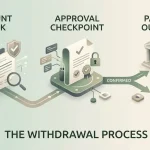
A “no-account” claim can describe a streamlined route into casino play, but it does not establish what will happen when winnings are requested. The phrase alone says nothing conclusive about whether identity details will be checked, whether the payment method must be shown to belong to the player, or when those checks may occur. Those are separate questions from how a site presents its initial access process.
For a UK-facing casino, the distinction matters because UKGC-licensed operators must verify a customer’s age and identity. A process that reduces form-filling at the outset cannot be treated as evidence that verification has been removed. Nor does a smooth first visit settle what information may be needed later. Identity or payment-ownership questions can arise before a withdrawal, even where the initial journey was described as not requiring an account.
The wording may therefore set an expectation broader than the evidence supports. “No account” might refer to a particular registration step, a way of starting a session, or a promotional description of the service. Unless the operator’s terms explain the relevant process, the phrase does not show which of these meanings is intended. It also does not establish that a withdrawal will be approved without further checks.
This is especially important because a deposit and a withdrawal are different stages of a transaction. A successful deposit does not, by itself, demonstrate that the operator has completed every check relevant to a later payout. The fact that funds were accepted is evidence only of that transaction; it is not proof that identity or payment ownership will never be queried. The same caution applies to an app or a quick-entry option: the form of access does not determine what may be required when funds are to be released.
UKGC-licensed operators must verify a customer’s age and identity; a simplified initial sign-up process does not mean these verification requirements have been removed.
The practical question is not simply whether a site asks for a conventional registration form. It is whether its stated terms explain the relationship between access, verification and withdrawals. A clear account of the process should distinguish what is needed to begin play from what may be requested to confirm a customer’s identity or the ownership of a payment method. If the wording describes only the first step, it cannot support a conclusion about the last.
Claims about checks should also be read precisely. “No checks at registration,” for instance, would not mean “no checks at any point”; the timing is limited by the wording. A claim that a payment can be made without entering certain details would likewise not establish that the same details will not be required later. Broad assurances should not be inferred from a narrow description of one part of the service.
This does not mean that every withdrawal will necessarily trigger a fresh request for documents. The available point is narrower: checks can arise before withdrawal, so an absence of visible checks at the beginning cannot rule them out. Treating this distinction as settled in either direction would go beyond what the claim itself establishes. The operator’s terms and the actual explanation of its verification process are more relevant than a short label.
For people comparing no-account casino claims, the strength of the wording can be assessed against the evidence it provides. Does it specify which stage is account-free? Does it explain what happens when a withdrawal is requested? Does it distinguish identity verification from confirmation that a payment method belongs to the customer? If these matters are not addressed, the claim remains limited: it may describe an entry route, but it does not answer questions about payout checks.
Casinos that accept WebMoney in the UK: evidence
The phrase “no account casino UK” can consequently be understood as a description of an access claim, not as a guarantee about the full customer journey. In the regulated British market, age and identity verification remain part of licensed gambling, and checks relating to identity or payment ownership may arise before money is withdrawn. Any interpretation that turns a simplified opening process into a promise of unchecked withdrawals should be treated with caution.
How to Assess No-Account Casino Offers and Reviews
A review of casino offers should distinguish the headline from the terms that determine how a promotion works. A bonus described as available without a conventional sign-up form is not, by that wording alone, evidence that the offer is open to every player or that its conditions are minimal. The useful question is whether the review identifies the actual promotion and explains its rules clearly enough to assess.
Start with the live promotion
Promotions change, so a review’s description should be checked against the operator’s current official offer and full terms. A past review may accurately record an earlier deal but cannot establish that the same bonus remains available. An offer should be treated as current only when it appears in the live official promotion terms.
The terms should identify who qualifies, how the incentive is credited, which games are eligible and how play contributes towards any wagering requirement. They should also set out expiry conditions, any maximum win and the rules governing withdrawal. These details affect the value and usability of an offer; a headline amount or number of spins cannot establish them.
Assessing Casino Promotions
- Check the current official promotion terms
- Identify eligible games and contribution rules
- Verify the wagering requirement multiplier
- Note the maximum win cap and expiry conditions
- Confirm the terms are visible within one click
A review that repeats promotional language without linking its claims to identifiable terms provides little basis for comparison. It is also important to distinguish an operator’s stated conditions from a reviewer’s interpretation. Where the review does not make that distinction, its conclusions should be treated cautiously.
Read wagering requirements precisely
A wagering requirement describes how much qualifying play is required before bonus funds or related winnings can be withdrawn. Its stated multiplier is not meaningful in isolation: the terms need to say what balance it applies to and which games count, including any different contribution rules. A review should not imply that all games contribute equally unless the official conditions establish that.
A specialist review reports that Great Britain-facing incentives are subject to a cap of ten times the bonus funds under rules effective from 19 January 2026. This is a dated regulatory limit, not a measure of the overall value of an offer. The terms still need to be read for eligible games, contribution rules and withdrawal conditions. A review should not use the cap to suggest that every other condition is favourable or that the promotion will be easy to complete.
The product covered by the incentive matters as well. A single incentive cannot combine more than one gambling product type. If a review describes an offer that appears to bundle different product categories, its account should be checked against the promotion terms rather than accepted at face value.
Casinos That Accept PayPal UK: What Can Be Verified
Assess the quality of a review
A useful no-account casino review makes its evidence traceable. It should identify the promotion being assessed, separate confirmed terms from general commentary and avoid presenting old conditions as current. If the reviewer gives an assessment of value, that judgement should follow from the stated wagering rules, eligible games, expiry and withdrawal conditions—not simply from the size of the headline offer.
Claims about an offer being “easy” or “generous” are not substitutes for the terms. A review may report such an opinion, but it should explain the basis for it. Where the relevant details are absent, the evidence supports only a limited conclusion: the promotion has been described, but its practical conditions cannot be fully assessed from that description.
The presentation of key limits is also relevant. The maximum win and wagering terms must be visible within one click of the bonus offer. A review that omits these conditions, or directs attention only to the headline while leaving material restrictions obscure, gives an incomplete picture of the promotion.
For a no-account casino guide, the same standard applies across every offer discussed: confirm that the live official terms exist, compare the review’s summary with them, and treat unsupported claims as unverified. This approach assesses the quality of the evidence without turning a promotional description into a recommendation.
Real-Money Play on Mobile: Deposits and Withdrawals Are Different
A mobile payment can fund casino play without being a route for receiving winnings. Pay by mobile is a deposit-only method: the charge is added to a phone bill or deducted from a prepaid balance, but a withdrawal cannot be returned that way. The distinction matters when assessing real-money play on a phone, since the payment option shown at deposit does not establish how cash-outs will be handled.
Payment Limits
Carrier billing and Boku may have specific transaction ceilings, such as £240 monthly or £30 per single transaction, depending on the provider.
For UKGC-licensed sites, withdrawals must be processed through another method. Examples include a bank transfer, debit card or regulated e-wallet. The specific options available depend on the site and the payment arrangements it supports. A deposit method may not be available for withdrawals, so the cashier’s withdrawal options need to be considered separately from the ways a balance can be funded.
This remains true when a casino describes its service as mobile-friendly or promotes a quick phone-based deposit. Those descriptions concern access or funding; they do not make the phone bill a withdrawal channel. A mobile casino experience therefore involves at least two distinct payment questions: whether a method can be used to deposit, and which alternative methods are available for cashing out.
Figures attached to carrier billing should also be treated with care. A specialist review reports a monthly ceiling of £240 for carrier billing. That figure is a reported limit, not evidence that every provider, network or casino applies identical terms. It should not be read as a recommended spending level or as a guarantee that a deposit of any particular size will be accepted.
The same qualification applies to Boku. A specialist review gives a £30 single-transaction limit for Boku deposits. This is a reported transaction ceiling, not a universal promise of availability across mobile casinos. The payment provider, mobile network and casino’s own cashier arrangements may affect whether the method is offered for a particular transaction.
No-minimum-deposit casinos in the UK: offers and rules
These distinctions are relevant to searches for a no-account casino on mobile, but they do not establish that a casino permits real-money play without other requirements. A payment method describes how funds move; it cannot, by itself, substantiate a claim about the account arrangement or the withdrawal process. For mobile play, the practical evidence is the casino’s current cashier information: the deposit methods it lists and the separate methods it makes available for withdrawals.
What “Without an Account” Can and Cannot Establish
The phrase “without an account” is narrower than it may appear. It can describe a route into a casino that avoids a conventional registration form, but the wording alone does not establish how the operator records a session, handles funds or verifies a customer. Nor does it show that a player can remain unidentified throughout the full gambling process.
That distinction matters because a simplified entry process and the checks attached to real-money gambling are separate matters. UKGC-licensed casinos must verify a player’s age and identity. A promotional claim about playing without an account cannot, by itself, override those requirements or show when the operator will request information.
The wording also says nothing definite about payment ownership. Identity or payment-ownership questions may arise before a withdrawal. A claim that play begins without a conventional account therefore does not establish that the person who deposited funds will be able to withdraw without further checks, or that the payment method will be accepted for a later payout.
A careful reading separates three claims that are sometimes blurred together: that registration is shortened, that an account is not visibly created at the start, and that no identity or payment checks will ever occur. The first two may describe aspects of the initial process; neither proves the third. The phrase cannot be treated as evidence that verification has been waived.
Account Claims Summary
- “No account” usually describes the entry route, not the full regulatory relationship
- Identity and age verification remain mandatory for UKGC-licensed sites
- Simplified registration does not guarantee unchecked withdrawals
- Payment methods do not substantiate account-free play claims
This does not mean that every operator uses the same process or requests the same information at the same point. Those details depend on the operator’s procedures and the circumstances of the transaction. The relevant evidence would be the operator’s own terms and explanations of verification, rather than the headline label alone.
Accordingly, “casino without account” is not a reliable description of the entire customer relationship. At most, it may indicate a different way to begin. It cannot establish that no customer record exists, that identity checks are absent, or that withdrawals are unconditional. These distinctions are important when comparing casinos described as operating without an account: the label concerns an entry claim, not proof of what happens when money is paid out.
Assessing New No-Account Casino Claims
Calling a casino “new” is a claim about when the relevant gambling operation began, not simply how recently its name or website appeared. A refreshed site, a new brand, or a change in ownership may create a new public profile without establishing that a new operator has launched. The wording “new no-account casino” therefore needs evidence connecting a launch date to the business providing the gambling service.
Useful evidence would identify the operating company, the date it began offering the service, and the domain through which it does so. A dated launch announcement can support a timing claim, but it is stronger when it can be matched to the company and domain shown in the operator’s terms. A licence-register entry can help establish whether the business is authorised to serve Great Britain; it does not, by itself, establish when the casino first opened.
Remote operators serving consumers in Great Britain need the relevant Gambling Commission licence. Brand names and domains should therefore be checked against the Commission’s public register, with attention to the legal entity behind the casino. A specialist review reports that the register dated 26 September 2026 did not identify a LuckyPays entry under that brand or its stated domain, including luckypays.io. That dated observation is not proof that a casino is newly launched, nor should it be treated as a current register result indefinitely.
The distinction matters because absence from a particular register search cannot establish a launch date. Nor does a recently published review, promotion, or social-media announcement demonstrate when the operating business began. These materials may point to a claim worth checking, but the date and identity need to align across records.
Descriptions of a casino as new are best treated as provisional unless the operator, domain, and launch timing are independently consistent. Where the evidence establishes only a recent rebrand or an undated announcement, the narrower description is more accurate. This approach avoids turning a label into a factual claim and keeps the assessment separate from the casino’s own presentation of itself.
Free Spins Without a Deposit: Terms That Matter
A no-deposit free-spin offer can appear to provide play without an initial payment, but the label alone does not establish how winnings can be used or withdrawn. The promotion’s live official terms determine whether the offer is available and what conditions apply. If it is not present there, it should not be treated as a current promotion.
A specialist review describes no-deposit free-spin offers as commonly involving 10–30 spins on specified slots. That is a reported range, not a guarantee about any particular casino or an indication that an offer remains active. The nominated games matter: terms should identify which slots qualify and how any resulting winnings are treated.
Free Spins
Commonly 10–30 spins on specified slots, subject to live official terms.
Credit Bonuses
Reported ranges of £2–£10 for no-deposit offers.
Wagering Requirements
Typically 30–60 times the bonus, though UKGC rules may limit this to ten times from January 2026.
The same review gives a reported range of £2–£10 for no-deposit credit bonuses and wagering requirements of 30–60 times the bonus. Those figures should not be assumed to apply to free spins, or to any live offer without checking its own terms. Under UK Gambling Commission rules taking effect on 19 January 2026, wagering requirements attached to bonus funds for incentives offered in Great Britain are limited to ten times. A promotion’s terms should therefore be read alongside the rules applicable to the offer.
Relevant details include expiry, eligible games, wagering conditions and withdrawal restrictions. These determine whether winnings from spins can be converted into withdrawable funds and what must happen first. The maximum win cap and wagering terms must also be visible within one click of the offer. A headline promising spins without a deposit is not enough to establish the value or practical conditions of the promotion.
Trustly and the Difference Between Depositing and Cashing Out
A casino page mentioning Trustly as a deposit option does not, by itself, establish that Trustly can also be used to withdraw winnings. Deposit and withdrawal functions are separate: a payment method may be offered for adding funds while cash-outs are handled through another route. The distinction matters when assessing claims about a Trustly casino with no account, since the payment label alone says nothing about the full process for moving money in and out.
Availability is operator-specific. Without current terms from the casino, it cannot be concluded that Trustly is offered there, that it supports withdrawals, or that a particular account arrangement applies. A payment brand appearing in a general list is not confirmation that the method is available for every transaction.
For UKGC-licensed sites, withdrawals must be processed through an alternative method, such as a bank transfer, debit card or regulated e-wallet. The relevant question is therefore not simply whether Trustly appears beside the deposit button, but which withdrawal routes the operator actually makes available. Those details should be stated in the operator’s current payment information and account terms.
Online Casinos That Accept SMS Deposits: Boku Guide
This distinction also limits what a “no account” description can establish. A deposit route cannot verify that registration is unnecessary, nor can it demonstrate that a matching cash-out route exists. Trustly’s presence, if confirmed by an operator, is evidence only of the payment function explicitly described. Deposit and withdrawal arrangements need to be checked separately, rather than inferred from the same logo or payment-method label.
Paysafecard Searches and the Limits of Payment-Method Evidence
Paysafecard may appear in descriptions of casino deposits, but a payment option alone does not establish that play is available without an account. These are separate questions: one concerns how funds can be added, while the other concerns the casino’s access and account arrangements. Treating the presence of a named payment method as proof of account-free play goes beyond what that detail shows.
Withdrawal arrangements also need to be considered separately. A deposit method may not be available for withdrawals, so the method used to fund an account does not, by itself, indicate how winnings can be paid out. UKGC-licensed sites must process withdrawals through an alternative method, such as a bank transfer, debit card or regulated e-wallet.
This distinction matters when assessing claims about a Paysafecard casino. The payment name can describe one part of the transaction without confirming the full route from deposit to withdrawal or the conditions for opening and using an account. A clear assessment therefore separates payment acceptance from account access and from cash-out arrangements, rather than treating them as interchangeable features.
No-account wording does not change that distinction. A casino’s stated deposit options cannot establish whether it requires an account, nor whether a deposit method can be used to receive winnings. The relevant evidence is the operator’s description of its account process and its withdrawal methods, considered separately. In the absence of those details, Paysafecard should be understood only as a payment-method reference, not as proof of no-account access or a particular withdrawal route.
Is there a “no verification” pay-by-phone casino?
No: paying by phone does not guarantee that verification will be skipped. Identity or payment-ownership checks may arise before a withdrawal.
Is LuckyPays licensed by the UK Gambling Commission?
No LuckyPays entry, including under luckypays.io, appears in the UK Gambling Commission public register dated 26 September 2026.
Can you withdraw to your phone bill when paying by mobile?
No. Pay-by-mobile is for deposits only; withdrawals must use another method, such as a bank transfer, debit card or regulated e-wallet.
Which payment types are listed?
The listed options include Boku and Payforit for mobile deposits, and bank transfers, debit cards or regulated e-wallets for withdrawals.
What is the maximum wagering requirement in Great Britain?
For bonus funds, the maximum wagering requirement in Great Britain is 10 times.
Find Casinos

£1 Minimum Deposit Casinos in the UK: How They Work
A cashier minimum is only one threshold; payment methods, bonus terms and withdrawal rules can...

£10 Minimum Deposit Casinos in the UK: What to Know
A £10 minimum sets an account-funding threshold, while payment options and operator terms determine how...

£2 Minimum Deposit Casinos in the UK: What to Know
A £2 cashier threshold sets the smallest accepted transaction, while promotions, gameplay and withdrawals can...

£20 Minimum Deposit Casinos in the UK: What It Means
A £20 threshold is one point in a varied UK range, and the amount accepted...

£3 Minimum Deposit Casinos in the UK: What It Means
A low cashier minimum sets the amount needed to fund an account, while later play...

£4 Minimum Deposit Casinos in the UK: What to Check
A low cashier threshold does not guarantee access to every feature, payment route or bonus;...

£5 Minimum Deposit Casinos in the UK
A minimum deposit sets the amount needed to add funds; it does not determine game...

Best Casino App UK: How Mobile Casino Access Works
Compare native apps with browser play, and see how UK licensing, payments, bonuses and mobile...

Mobile casino payments by phone credit in the UK
See how mobile-account payments work at casinos and how deposits, charges, withdrawals and slot-related conditions...

Casino No ID Verification UK: What the Checks Mean
Some casinos check identity electronically or request documents later, but those approaches do not remove...

Casinos That Accept Apple Pay in the UK: Deposit Guide
The available evidence distinguishes Apple Pay from Boku and explains how payment methods, bonus terms...

Casinos that accept bank cheques in the UK
A bank-cheque option must be confirmed as a distinct payment method; mobile billing and deposit-only...

Casinos That Accept Bank Transfers in the UK
Boku support is distinct from bank-transfer acceptance, and a casino licence does not confirm which...

Casinos That Accept Boku in the UK: Deposits and Slots
Learn how phone-billed deposits affect casino funds, which conditions may apply, and what alternatives to...

Casinos That Accept Monzo in the UK: What Is Known
Boku and other Pay by Phone listings describe phone-billed deposits, not proof that an online...

Casinos That Accept Pay N Play in the UK
Pay n play can describe account setup or payment, so it does not by itself...

Casinos That Accept PayPal UK: What Can Be Verified
General payment information cannot confirm whether a specific casino accepts PayPal or permits withdrawals. How...

Casinos That Accept Siru Mobile in the UK
Siru Mobile and Boku are distinct payment methods, and reported casino listings do not confirm...

Casinos That Accept Solana in the UK: What to Check
A casino’s payment options and game catalogue are separate claims, so each needs to be...

Casinos that accept WebMoney in the UK: evidence
Available UK reporting identifies Boku deposits at several casinos, but does not confirm WebMoney support...

Jackpot Mobile Casinos in the UK: Games and Rules
A guide to jackpot formats, mobile access, UK rules, bonus terms and the limits of...

No-ID Verification Withdrawals at UK Casinos
See how identity checks, withdrawal approval and payment methods affect claims of no-ID real-money play...

No-minimum-deposit casinos in the UK: offers and rules
Offers can mean free spins rather than deposit-free real-money play, while payment routes and operator...

Online Casino No Registration in the UK: Explained
Browser-based games need no separate download, while free-play mode uses simulated funds and does not...

Online Casinos With No Sister Sites: UK Guide
Sister sites may share a parent company or core technology, but similar branding alone does...

Online Casinos That Accept SMS Deposits: Boku Guide
Boku deposits start in the casino cashier and require SMS authorisation; availability, accepted amounts and...

UK online casino payouts: RTP and house edge
RTP, payment availability and bonus wagering offer useful comparison points, but none guarantees a particular...