USA Casinos for UK Players: What the Label Means
 Available in GB

The label alone does not show where an operator is based, who licenses it or whether it can serve customers in Great Britain.
Table of Contents
- What “USA Casino” Means for UK Players
- When a Site Accepts UK Players
- Licensing and the Limits of the “American” Label
- Payments, Payout Reliability and Verification
- How Withdrawal Times Differ by Method
- Industry Links and Conflicts of Interest
- Deposits, Account Checks and Site Security
- Bonus Terms and Free Spins at Offshore Casinos
- Assessing Casino Reviews Without a Ranked List
- Real-Money Play and UK Tax Treatment
- Casino Safety
What “USA Casino” Means for UK Players
The phrase “USA casino” is a description, not a regulatory category. It may suggest an American connection, but it does not establish where a gambling operator is based, which authority licenses it, or whether it is authorised to serve customers in Great Britain. A site’s branding alone cannot answer those questions.
The label can be used in different ways. It might refer to an operator presenting itself as American, to a site with an American-themed name or design, or simply to wording used to attract people interested in casinos associated with the United States. Those possibilities are not equivalent. None, on its own, proves that the operator holds a US licence or is legally entitled to take bets from British customers.
The same caution applies to descriptions such as “US online casino” or “American online casino”. They may sound specific, but the words do not identify a regulator or demonstrate that a site is compliant with British requirements. A site may be accessible from a UK address and still not be authorised to offer gambling services in the British market. Likewise, a claim of an American connection does not establish that the operator is physically located in the United States.
For UK players exploring USA casinos in 2026, payout timing is one practical detail to check. This list gives a concise reference point for the operators featured on this page.
1. NightLuck
Payout speed: 1-3 business days NightLuck lists a payout speed of 1–3 business days.
2. Britsino
Payout speed: 1-3 business days Britsino lists a payout speed of 1–3 business days.
3. Jetsetspins
Payout speed: 1-3 business days Jetsetspins lists a payout speed of 1–3 business days.
4. Chanze
Payout speed: 1-3 business days Chanze lists a payout speed of 1–3 business days.
5. BeOnBet
Payout speed: 1-3 business days BeOnBet lists a payout speed of 1–3 business days.
6. Amunbet
Payout speed: 1-3 business days Amunbet lists a payout speed of 1–3 business days.
7. SlotoSport
Payout speed: 1-3 business days SlotoSport lists a payout speed of 1–3 business days.
8. EvoSpin
Payout speed: 1-3 business days EvoSpin lists a payout speed of 1–3 business days.
9. WinBeast
Payout speed: 1-3 business days WinBeast lists a payout speed of 1–3 business days.
10. Revery Play
Payout speed: 1-3 business days Revery Play lists a payout speed of 1–3 business days.
The operator’s position under UK law
For customers in England, Scotland and Wales, the relevant issue is whether the operator holds a licence from the UK Gambling Commission. Online gambling sites without that licence cannot legally offer their services in those parts of the UK. The requirement concerns the operator and its provision of gambling facilities to British customers; it is not determined by whether the site uses American branding or is described as a USA casino.
In this context, a foreign casino means an online gambling operator that accepts British customers but does not hold a UK Gambling Commission licence. The term describes the operator’s relationship to the British regulatory system. It does not, by itself, say that the operator is American: a foreign operator could be based in a different country, and a site that markets itself as American may not be based there at all.
This distinction matters because “USA” and “foreign” answer different questions. “USA” is a geographic or marketing label. “Foreign casino”, as used in the UK market, identifies an operator accepting British customers without a UKGC licence. Neither label substitutes for checking the operator’s regulatory status, and the American wording cannot be treated as evidence of UK authorisation.
The player’s position is different
The legal position of an operator should not be confused with that of an individual player. A British resident does not commit an offence simply by placing a bet with a casino licensed outside the UK. UK law does not prohibit an individual from betting with an overseas operator, and there is no criminal penalty for the player under the stated position.
International Casinos for UK Players: Licensing Guide
That does not make the operator authorised to serve the British market. The distinction is between a restriction on an operator offering gambling services without the required UKGC licence and the absence of a criminal prohibition on an individual using an overseas site. The fact that a player is not criminally liable does not confer a UK licence on the casino or change the rules governing its conduct in Great Britain.
Consequently, a person looking for a USA casino for UK players encounters two separate questions: what the American description refers to, and whether the operator is licensed to offer gambling in the British market. The first cannot resolve the second. A site can use American language or imagery while its regulatory position remains a separate matter.
Nor does the expression “best USA online casinos” establish a meaningful legal category. Without knowing the operator’s UKGC status, a ranking based on an American label alone would not show whether a site is permitted to serve British customers. The same is true of a newly launched site: “new” describes its age or presentation, not its authorisation.
The central distinction is therefore straightforward. For operators serving customers in England, Scotland and Wales, UKGC licensing is the relevant requirement. For British players, placing a bet with an overseas casino is not itself a criminal offence. The term “USA casino” establishes neither that an operator is American nor that it is authorised in the UK; those conclusions cannot be drawn from the label alone.
Regulatory Risk
Online gambling sites without a UK Gambling Commission licence cannot legally offer their services to customers in England, Scotland, and Wales.
When a Site Accepts UK Players
A USA casino site opening in a British browser does not, by that fact alone, have permission to serve customers in Great Britain. Technical access and legal authorisation are separate questions. A site may load, display its games and allow account registration while remaining outside the regulatory system that applies to operators offering gambling to people in England, Scotland and Wales.
The legal obligation rests on the operator. Remote gambling businesses serving those markets must hold the relevant licence from the UK Gambling Commission (UKGC), wherever the business is based. An operator without that licence cannot lawfully provide gambling facilities to British customers or advertise its services in the UK. Offshore casinos are outside UKGC oversight; they are not subject to UKGC enforcement or its requirements, including mandated affordability checks. A website’s willingness to accept a British visitor does not alter those conditions.
That distinction also matters when a site’s terms say that customers from Britain are not accepted. A stated restriction is evidence of the operator’s declared policy, not proof that the restriction works in practice. The reverse is also true: a site that appears accessible has not thereby demonstrated that it is authorised to serve the market. A browser’s location, a registration form and an operator’s wording each reveal something different; none establishes UKGC approval.
A report by gambling.com describes some non-UK-licensed casinos as having access restrictions for British visitors that are not consistently enforced. The report also says that a basic VPN can allow a user to bypass a block. This is a time-sensitive account from one publication, not evidence that every offshore site behaves in the same way. It does, however, illustrate why a visible access barrier and a regulatory boundary should not be treated as interchangeable. Circumventing a site restriction does not grant the operator a UKGC licence.
VPN-Friendly Casinos in the UK: Access and Terms
For someone searching for a USA casino for UK players, the phrase “accepts UK players” can therefore describe a practical circumstance rather than a lawful market status. The site may accept registration or permit access, but those actions do not establish that the operator may provide gambling facilities in Great Britain. Nor does the “USA” label settle where the business is based or which regulator, if any, supervises it. Those questions require separate evidence.
The legal exposure is also distinct for the operator and the individual. The prohibition described above concerns an unlicensed operator providing gambling facilities to customers in Great Britain, and its advertising there. It does not make it a criminal offence for a British player to place a bet with an overseas operator; there is no player fine or criminal prosecution simply for doing so. That absence of a player penalty should not be confused with UKGC protection: a customer using an offshore casino is outside the Commission’s regulatory framework.
Self-exclusion creates a further practical gap. GamStop covers every UKGC-licensed operator, so a person registered with the scheme is excluded from all UK-licensed gambling sites. Foreign casinos outside the UKGC’s remit do not participate in GamStop and are not bound by its exclusion. The protection therefore does not automatically carry across to an offshore site.
GamStop Limitation
Foreign casinos outside the UKGC’s remit do not participate in GamStop and are not bound by its exclusion requirements.
A specialist review has reported that a person who has self-excluded through GamStop may be able to open an account at a foreign casino and deposit without the safeguards provided by the scheme. That account is a warning about a possible route around self-exclusion, not a claim that every site has identical registration practices. The important point is structural: GamStop’s coverage applies to UKGC-licensed operators, while an offshore operator is not subject to the scheme. An apparent ability to gain access should not be read as evidence that the site supplies equivalent protections.
For these reasons, access alone is a weak test of status. A page loading from a British connection, an account form accepting a UK address, or a terms page that appears to permit play cannot replace confirmation of the operator’s regulatory position. In Great Britain, the relevant distinction is whether the operator holds the required UKGC licence to serve the market—not whether its website can be reached.
Safe Online Casinos in the UK: What to Check
Licensing and the Limits of the “American” Label
“American” can describe a casino’s branding, imagery or stated connection with the United States. It does not, by itself, identify the regulator responsible for the operator or establish which markets the operator is authorised to serve. A site presented as a USA casino may therefore have a regulatory status quite different from what its name or design suggests.
The relevant distinction is between a brand’s geographic presentation and the licence under which its operator conducts gambling. A website can use American-themed language without being licensed in the United States. Equally, a licence issued outside the UK does not become a UK licence because the site accepts British customers or is described as an American casino. These details should not be treated as interchangeable.
For UK-facing gambling, the key regulatory question is whether the operator holds the required licence from the UK Gambling Commission. Remote operators offering gambling to customers in Great Britain must hold the relevant Commission licence, irrespective of where the business is based. An overseas licence does not replace that requirement. Accordingly, a site’s use of terms such as “US casino”, “American casino” or “USA slots” cannot establish that it is authorised to serve the British market.
What an offshore licence establishes
An offshore licence indicates a regulatory connection to the jurisdiction that issued it. It does not, on its own, demonstrate that the operator is authorised in every country where its website can be viewed or where customers may attempt to register. Permission in one jurisdiction should not be read as permission in another.
This distinction matters when assessing USA casinos accepting UK players. A website may be accessible from Britain, and its branding may suggest an American connection, while its operator holds a licence issued elsewhere. Neither accessibility nor branding answers whether the operator has the UK Gambling Commission’s authorisation. The licence itself, the identity of the operator and the regulator responsible for it are separate matters.
The available information about Santeda illustrates the limit. Santeda holds a Curaçao licence, but that licence does not permit the company to operate in the UK or the US. The fact that a licence exists is therefore not evidence that Santeda is authorised in either of those markets. Nor does describing a Santeda brand as American alter the scope of the Curaçao licence.
Licence Scope
A licence issued in one jurisdiction, such as Curaçao, does not confer permission to operate in other markets like the UK or the US.
This is a narrow but important point: the presence of a licence should not be mistaken for universal regulatory approval. The jurisdiction that issues a licence defines the relevant regulatory relationship; the licence cannot be assumed to confer permission in other markets. In Santeda’s case, the stated Curaçao licence does not authorise operation in the UK or the United States.
The limits of the American label
The phrase “USA casino” is not a regulatory category that establishes the location of the operator, the jurisdiction of its licence or its right to serve UK customers. It is possible to infer that a site is using an American identity or theme, but that is not enough to establish its legal status. A casino’s name, presentation and intended audience should not be treated as proof of licensing.
That limitation also applies to claims about USA casino sites accepting UK players. The word “accepting” may describe a practical ability to open an account or use a website, but practical access does not establish authorisation. For licensing purposes, the relevant question remains whether the operator holds a UK Gambling Commission licence to provide gambling to customers in Great Britain. A foreign licence and an American-facing brand do not answer that question.
The same caution applies to descriptions such as “new US casino” or “US gambling site”. A recently launched site is not necessarily licensed in the United States, and a site that appears American is not necessarily operated from there. Without information identifying the operator and its licence, the label supports no reliable conclusion about its regulatory standing. It is more precise to treat “American” as a description used by the brand, unless the operator’s licensing position is independently established.
Merkur Casino Online UK: Games, Demos and Checks
This does not mean that every site using American branding has the same licence status. It means that the branding alone cannot distinguish between operators with different regulatory arrangements. A claim of American identity is not a substitute for evidence about the company responsible for the gambling service and the regulator under whose authority it operates.
UK authorisation remains a separate test
For the British market, the UK Gambling Commission’s role is distinct from that of an offshore regulator. Operators selling remote gambling services into Great Britain are required to hold the relevant Commission licence. Offshore casinos operate outside the UKGC regulatory system and are not regulated by the Commission. A licence from elsewhere does not place an operator under UKGC oversight.
This distinction should remain clear even where a site’s marketing describes it as licensed or regulated. Those words are incomplete unless the regulator and the scope of the authorisation are identified. “Licensed” does not necessarily mean licensed by the UK Gambling Commission, and a licence from another jurisdiction does not provide UKGC protections or oversight. Offshore operators also do not provide the UKGC-mandated affordability checks that apply within the Commission’s regulatory framework.
The regulatory status is therefore not established by a site’s apparent popularity among British users, its use of sterling, or its American-themed presentation. Those characteristics concern how the service is presented or used; they do not change the licence held by the operator. Likewise, a casino does not acquire UK authorisation simply because it is reachable from a UK internet connection.
UK Authorisation
For operators serving the British market, the only relevant regulatory requirement is holding a UK Gambling Commission licence.
For a site to be described accurately, its operator and licensing jurisdiction need to be distinguished from its brand identity. If the operator is licensed offshore, that status should be stated as such, rather than allowing “American” to imply a US or UK licence. In the case of Santeda, the available licensing detail is specific: its Curaçao licence does not authorise it to operate in either the UK or the US. The label attached to its brands cannot expand that permission.
Reading licensing claims precisely
A licensing claim can be assessed by asking what it actually identifies: the operator, the issuing regulator and the markets in which the authorisation applies. If those elements are blurred together, a general statement that a casino is “licensed” may create a misleading impression. An offshore licence is not equivalent to a UK Gambling Commission licence, and an American-sounding brand does not establish a US licence.
The distinction is particularly relevant to lists or descriptions of American casinos said to accept British customers. Such wording can conflate three separate points: the casino’s branding, its ability to receive customers through its website, and its regulatory permission to serve the UK market. Only the last point answers whether it holds the necessary UK authorisation. The first two cannot stand in for it.
A careful description therefore avoids treating “USA casino” as proof of where an operator is licensed. Where an offshore licence is identified, it should be understood as a licence from that jurisdiction, not as evidence of UKGC regulation. Where the operator’s licensing position is not established, the geographic label alone does not resolve the uncertainty.
Casino Without a UK Licence: Regulation and Risks
Payments, Payout Reliability and Verification
A casino’s advertised payout speed is not evidence that a withdrawal will be approved, or that the operator will resolve a dispute fairly. Payment reliability depends on the terms and procedures applied by the individual operator, as well as its regulatory status. The label “USA casino” does not establish either.
Withdrawal limits, pending periods and verification requirements can differ substantially between operators, according to a specialist review. Those conditions affect when winnings can be requested, whether a payment can be held for checks, and what steps may be required before funds are released. A general claim that a site offers fast payouts therefore says little about the experience in a particular case. The relevant terms are the operator’s own withdrawal rules, not a broad description of a casino category.
There is also a more fundamental distinction between a delay and a refusal. A pending payment may reflect a stated processing condition or an identity check; a refusal to pay is a different problem. Gambling.com has reported cases in which unlicensed sites refused to release winnings, leaving customers without legal recourse. That report should not be read as proof that every offshore operator behaves this way, but it illustrates the consequences of relying on a site outside the UK regulatory system.
Offshore casinos are not regulated by the UK Gambling Commission. They do not provide the same protections as UKGC-licensed operators and are not subject to UKGC enforcement. In particular, UKGC-mandated affordability checks do not apply to them. A payment page, a security statement or a claimed licence from another jurisdiction does not replace that oversight or ensure that a disputed withdrawal will be resolved in a British player’s favour.
Payout Risks
Unlicensed sites may refuse to release winnings, and users of such platforms have no legal recourse under the UK regulatory system.
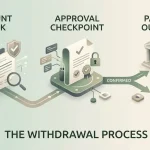
UKGC-licensed operators must verify a customer’s identity before processing a withdrawal. That requirement can make verification part of the normal payment process, rather than evidence on its own that a site is acting improperly. However, identity checks and their timing vary by operator. For an offshore site, the applicable procedure depends on its own terms and regulatory framework; UKGC rules cannot be assumed to govern it.
This distinction matters when interpreting claims about trusted American casinos for British players or casinos with rapid payouts. Neither “trusted” nor “fast” is a regulatory status, and neither guarantees payment. A site may publish withdrawal conditions, but the existence of those conditions does not establish how a dispute will be handled. Conversely, a delay alone does not show that a payment has been refused. The operator’s stated rules and the protections available under its regulator are separate parts of the assessment.
Searches for low-deposit casinos, no-deposit offers, welcome bonuses or sweepstakes-style play also do not answer the payout question. Promotional presentation is separate from the rules governing withdrawals. The central uncertainty is whether winnings can be claimed under the operator’s conditions and what remedy exists if a payment is withheld. For an offshore casino, the absence of UKGC oversight means that the UK regulatory framework cannot be relied on to resolve that dispute.
How Withdrawal Times Differ by Method
Withdrawal speed depends on the payment route and the operator’s own handling, so a short processing time does not establish that a casino is reliable or properly regulated. Sites described as American may be licensed offshore; they are not regulated by the UK Gambling Commission.
Malta MGA Licence for Online Casinos: UK Rules
Skrill and Neteller are among the quicker e-wallet options reported for foreign casinos. Most such casinos are reported to clear these transactions within 24 hours, with many doing so in under 12 hours. That can mean a withdrawal is processed on the day it is requested, but “same day” is not assured: a request made later may not be completed within that calendar day, and the reported processing time does not account for every step before funds reach an account.
Bank transfers tend to take longer. A specialist review reports that they can take five to seven business days, with some operators adding a processing delay before the transfer begins. The total wait can therefore exceed the bank-transfer timeline itself. These timings are reported estimates, not a common standard applying to every site.
A specialist review also reports that cryptocurrency withdrawals at foreign casinos can clear in under an hour, faster than fiat payment methods. The value of the cryptocurrency can change, however, so the amount received after conversion may differ from its value when the withdrawal was requested.
These comparisons concern transaction timing, not the likelihood that a withdrawal will be approved or paid. Offshore casinos fall outside UKGC oversight, and a rapid transaction does not provide the protections associated with a UKGC-licensed operator. Similarly, a delay does not by itself explain whether an operator is conducting checks, applying its own processing conditions or failing to pay. Timing claims should therefore be treated as specific to the operator and method, rather than as a guarantee of a same-day or instant withdrawal.
E-wallets
Skrill and Neteller transactions are often cleared within 24 hours, and frequently in under 12 hours.
Bank Transfers
These typically take five to seven business days, potentially longer if the operator adds a processing delay.
Cryptocurrency
Withdrawals can clear in under an hour, though the final value may change due to currency conversion.
Industry Links and Conflicts of Interest
Commercial links between gambling businesses and companies involved in related services can affect how casino coverage is read. One documented example concerns Santeda and SIS: under their contract, SIS received a share of revenue generated by losing bets placed through Santeda’s brands. The arrangement tied SIS’s income to gambling activity on those brands, rather than solely to a fixed service fee.
That fact is relevant when assessing material about casinos connected with the parties. A revenue-based relationship may create a financial interest in the performance of the brands involved. It does not, by itself, establish that SIS controlled editorial decisions, that any particular review was biased, or that the relationship applied to every casino discussed in coverage. Those conclusions would require evidence beyond the contract term.
For readers assessing reviews of USA casinos for UK players, the useful distinction is between a disclosed commercial connection and an unsupported allegation about its effects. Coverage can describe operators accurately while still appearing in an environment shaped by business relationships. Disclosure helps establish that context, but it does not independently verify the claims made about a casino or demonstrate how prominently favourable and unfavourable information was presented.
The SIS–Santeda arrangement therefore warrants attention as a specific financial link, not as proof of misconduct. Its significance depends on the subject and purpose of the material being assessed, and on whether the connection is made clear. Treating the relationship as relevant context, while avoiding conclusions that the available evidence cannot support, is a more reliable basis for evaluating casino coverage.
Deposits, Account Checks and Site Security
Opening an account and funding it are separate steps. A casino may ask for personal details and identification to verify an account, while age must be checked before a customer is allowed to deposit. The process described for non-GamStop casinos therefore includes providing the requested details and then selecting a deposit method; crypto may be among the options offered. The methods available, and the checks applied, are specific to each operator.
A low minimum deposit can make it possible to start with a small amount, but the label “low deposit” does not establish that a site is suitable or authorised to serve British customers. Nor does a deposit threshold show how the operator handles identity checks or account security. Those matters need to be considered separately. Credit cards cannot be used for gambling deposits in the UK, including through a money service business, so they should not be treated as an available funding route.
Some specialist casino reviews describe non-GamStop sites as using encryption to protect personal and financial information. That is a report about stated security measures, not proof that a particular site’s systems have been independently assessed or that its handling of accounts is equivalent to a UK-licensed operator’s. Encryption can protect information in transit, but it does not establish the operator’s regulatory status or provide UK regulatory oversight.
Non-GamStop casinos operating outside the UK Gambling Commission’s remit are not regulated by the Commission. They also do not provide the affordability checks mandated for UKGC-licensed operators. A security claim should not be read as evidence of those protections: technical safeguards and regulatory supervision address different risks.
Do
- Verify the operator’s UKGC licence status
- Check the specific account-verification process
- Review the stated deposit methods
Don’t
- Rely on a “low deposit” label as proof of suitability
- Assume a security statement equals UKGC oversight
- Use credit cards for gambling deposits
Choosing a site on the basis of a small deposit or a security statement alone consequently leaves important questions unanswered. The operator’s licence status, account-verification process and stated deposit methods are distinct considerations. A site accepting a deposit from a British customer does not thereby become UKGC-licensed, and its own description of security does not bring it under UKGC oversight. For account handling, the key distinction is between measures the operator says it uses and safeguards that follow from regulation in Great Britain.
Bonus Terms and Free Spins at Offshore Casinos
Promotions at offshore casinos can take several forms: deposit-match bonuses, packages of free spins, no-deposit offers and cashback. A specialist review describes these as common formats among foreign casinos serving British customers; that account should not be treated as a complete or permanent picture of the market. The availability and terms of any offer depend on the individual operator.
A deposit match adds bonus funds in relation to a qualifying deposit. Free spins provide plays on specified games, while a no-deposit offer does not require a deposit to receive the stated promotion. Cashback is framed as a return linked to losses under the offer’s conditions. These labels alone do not establish what can be withdrawn: the terms determine how bonus funds and any associated winnings are treated.
The central condition may be a wagering requirement. This sets the value of qualifying bets that must be placed before bonus funds can be converted into cash eligible for withdrawal. A specialist casino review gives the illustration of a £100 bonus matched at 100% with a 35-times requirement: the required qualifying bets total £3,500. That calculation describes the stated example, not a standard offer. A separate review example uses a £20 bonus and the same multiplier, producing £700 in qualifying bets. The amount of the bonus is therefore not the amount that can necessarily be cashed out.
Free spins also need to be assessed through their conditions, rather than by the headline count or promotional value. Where an offer applies wagering requirements, the relevant question is how those conditions affect winnings from the spins and when, if at all, they become withdrawable. No assumption about conversion should be made from the phrase “free spins” alone.
Casino Safety: Licensing and UK Casino Sites
Specialist reviews have reported that offshore welcome packages may be larger, attributing this to operators not being bound by UK Gambling Commission restrictions on bonus terms and promotional language. This is a reported comparison, not evidence that every offer is generous or favourable. Offshore casinos are not regulated by the UK Gambling Commission, and they do not provide UKGC-mandated affordability checks. Promotional terms should therefore be kept distinct from regulatory protection: a large headline offer does not establish either.
Assessing Casino Reviews Without a Ranked List
Real-Money Play and UK Tax Treatment
Gambling winnings are not subject to income tax in the United Kingdom. This applies whether the winnings come from an operator licensed by the UK Gambling Commission or from one that is not. For a British player, the tax treatment of a gambling win therefore does not change solely because a casino is based overseas or lacks a UKGC licence.
That tax position should not be confused with the operator’s regulatory status. A player’s winnings being free from income tax does not mean that an overseas casino is authorised to provide gambling services in Great Britain. Remote operators serving customers in England, Scotland and Wales must hold the relevant UK Gambling Commission licence. Offshore casinos operating outside that system are not regulated by the UKGC, even where they accept British customers.
The distinction matters when interpreting claims about real-money play. “Pays real money” describes the possibility of receiving winnings; it does not establish that an operator is licensed for the British market, or that a payout is assured. Gambling winnings remain untaxed under the stated UK rule, but that rule offers no protection if an operator disputes or refuses a payment.
Offshore operators also do not provide UKGC-mandated affordability checks. Tax treatment is therefore a narrow point: it concerns whether winnings are taxed as income, not the safeguards attached to an account or the legality of an operator’s services in Britain. These are separate questions and should not be treated as interchangeable.
Is it legal for UK residents to use casino sites that operate outside the UK’s licensing framework?
Yes. A British player does not commit an offence by betting with an overseas casino, but an operator without a UK Gambling Commission licence cannot lawfully offer gambling to customers in England, Scotland and Wales.
Can I play at a casino licensed outside the UK?
Yes, playing there is not itself illegal for a British player. However, an overseas licence does not authorise the operator to serve customers in England, Scotland and Wales.
How long do withdrawals take at the listed operators?
For foreign casinos, Skrill and Neteller withdrawals often clear within 24 hours, and some take under 12 hours; crypto withdrawals can clear in under an hour. Bank transfers often take five to seven business days, with possible extra processing time from the casino.
What happens if I have a dispute with a foreign casino?
A foreign casino is outside UK Gambling Commission oversight, and customers at unlicensed sites have sometimes been refused winnings with no legal recourse.
What does wagering requirement actually mean in practice?
It is the amount you must stake before bonus funds can be withdrawn. For example, a 35x requirement on a £20 bonus means placing £700 in qualifying bets.
Are foreign casinos safe for UK players to use?
There is no general assurance of safety: foreign casinos are not regulated by the UK Gambling Commission, and some unlicensed sites have refused to pay winnings, leaving customers without legal recourse.
Casino Safety

Anjouan Casino Licence in the UK: What It Means
Anjouan authorisation does not replace a UK Gambling Commission licence for gambling services supplied in...

Foreign Casinos for UK Players: How They Work
A practical explanation of how non-UKGC sites operate, what offshore licensing means, and where British...

International Casinos for UK Players: Licensing Guide
The guide explains how UK licensing affects access and protection, and what to weigh across...

Offshore Casino Sites in the UK: Licensing Explained
The guide distinguishes operators outside UKGC licensing from overseas-based firms that hold a UK licence,...

Offshore casinos for UK players: how to assess sites
In the UK market, offshore means accepting British customers without a UKGC licence—not simply operating...

British Casinos Not on GamStop: Rules and Risks
The guide distinguishes UKGC-regulated sites from casinos outside GamStop and examines licensing, bonus terms, safeguards...

Casino sites not registered with GamStop in the UK
GamStop participation follows UKGC licensing, while a casino’s branding or game range does not establish...

Non-UK Licence Casinos: Regulation and UK Rules
Licensing depends on the regulator and the markets an operator is authorised to serve, not...

Casino Without a UK Licence: Regulation and Risks
A foreign gambling licence does not provide UKGC oversight or establish the protections available to...

Casinos That Bypass GamStop: Risks and Limits
GamStop’s reach, offshore licensing and reported workarounds raise distinct questions about protection, access and risk....

Curaçao Casino Licence UK: What It Means
A Curaçao licence identifies an offshore licensing framework, but does not by itself show that...
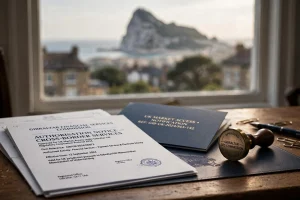
Gibraltar Casino Licence and UK Gambling Rules
A Gibraltar licence concerns an operator’s status there; serving customers in Great Britain requires separate...

Merkur Casino Online UK: Games, Demos and Checks
Merkur may name a game provider, a casino brand or a venue, so operator identity...

Most Trustworthy Online Casinos in the UK: Key Checks
A practical framework for weighing UKGC oversight, operator records, GAMSTOP claims and real-money terms without...

Non-Gamban Casinos in the UK: Self-Exclusion Explained
GAMSTOP coverage, direct site exclusions and the limits of labels clarify how UK online self-exclusion...

Non-GamStop Curaçao Casino Sites: UK Context
A Curaçao licence claim does not establish UK authorisation or whether a casino is covered...

Non-GamStop European Casinos and UK Self-Exclusion
GAMSTOP covers participating licensed online operators, while a request to one casino applies to that...

Non-UK-Registered Casinos: Regulation and Risks
The guide explains how UK law, GamStop access, payment conditions and licensing differ across casinos...

Non-UK Regulated Casinos: UK Rules Explained
A casino may hold a licence abroad, but that does not make it UK-regulated or...

Non-UKGC Licensed Casinos: Regulation and Risks
Non-UKGC describes a casino’s relationship with the British regulator, not whether it holds a licence...

Malta MGA Licence for Online Casinos: UK Rules
An MGA licence indicates status within Malta’s framework, but does not establish permission to offer...

Online slots not on GamStop: what the label means
The term describes a casino’s connection to GamStop, not a distinct slot format or game...

Safe Online Casinos in the UK: What to Check
A practical guide to UK licensing, account and payment checks, safer-gambling controls, and the limits...

Trusted Casinos Not on GamStop UK: What to Check
A closer look at licensing disclosures, player safeguards and site checks—and what they cannot establish...

Trusted UK Casino Guide: Licensing and Checks
UK licensing depends on offering remote gambling to Great Britain, while verification, withdrawals, bonuses and...

VPN-Friendly Casinos in the UK: Access and Terms
A VPN routes a connection through another server, but it does not guarantee account acceptance...