Trusted UK Casino Guide: Licensing and Checks
 Available in GB

UK licensing depends on offering remote gambling to Great Britain, while verification, withdrawals, bonuses and payment methods provide further checks.
Table of Contents
- How UK Gambling Commission Licensing Applies Online
- Real-Money Accounts: Verification, Limits and Withdrawals
- What Public Register Records Can Reveal About Casino Sites
- Assessing Claims About the Best Trusted Casinos
- Crypto Casinos and the Limits of What Can Be Verified
- Great Britain and Northern Ireland: Different Regulatory Remits
- Casino Reviews, Free Spins and Bonus Conditions
- Casino Apps and the Rules That Still Apply
- Bitcoin and Dogecoin Casinos: Regulatory Evidence
- Live Dealer Play, E-Wallets and Payment Processing
- Casino Safety
How UK Gambling Commission Licensing Applies Online
For an online casino serving customers in Great Britain, the central regulatory question is whether it provides remote gambling facilities to people in that market. If it does, the operator needs the relevant UK Gambling Commission licence. The rule applies whether the business is based in Britain or elsewhere: its corporate address does not, by itself, determine whether a licence is required.
This makes the destination of the service more significant than the operator’s place of establishment. A business may run its website, staff or corporate functions from outside Great Britain, yet still offer gambling to consumers here. In that situation, overseas location is not an exemption from the licensing requirement. The Gambling Commission regulates remote gambling offered to consumers in Great Britain, and operators offering real-money gambling in England, Scotland and Wales must hold a UKGC Licence.
The principle matters when assessing claims that an online casino is trusted. A polished website, an international business address or a description of the company’s overseas regulation does not establish that it is authorised to serve the British market. The relevant baseline is whether the operator holds the appropriate UKGC Licence for the activity it offers to consumers in Great Britain. A foreign licence may relate to another jurisdiction, but it does not replace the British requirement.
Choosing a UK casino calls for checking the details that matter to you, including how quickly payouts are stated to be processed. Use the information below as a limited reference, not as a complete assessment of trustworthiness.
1. NightLuck
Payout speed: 1-3 business days NightLuck has a stated payout speed of 1–3 business days. No other operator details were provided here to assess.
2. Britsino
Payout speed: 1-3 business days Britsino lists payout processing at 1–3 business days. The available information is limited to this payout-speed detail.
3. Jetsetspins
Payout speed: 1-3 business days Jetsetspins has a stated payout speed of 1–3 business days. Further information would be needed for a broader assessment.
4. Chanze
Payout speed: 1-3 business days Chanze lists payouts as taking 1–3 business days. No other details are available here to describe its offer.
5. BeOnBet
Payout speed: 1-3 business days BeOnBet has a stated payout speed of 1–3 business days. This is the only operator detail provided.
6. Amunbet
Payout speed: 1-3 business days Amunbet lists payout processing at 1–3 business days. The supplied information does not support a wider verdict.
7. SlotoSport
Payout speed: 1-3 business days SlotoSport has a stated payout speed of 1–3 business days. No additional facts were supplied for this reference card.
8. EvoSpin
Payout speed: 1-3 business days EvoSpin lists payouts as taking 1–3 business days. Other aspects cannot be assessed from the information provided.
9. WinBeast
Payout speed: 1-3 business days WinBeast has a stated payout speed of 1–3 business days. The available detail is limited to that timeframe.
10. Revery Play
Payout speed: 1-3 business days Revery Play lists payout processing at 1–3 business days. No further operator information was provided here.
The scope is tied to the service being offered, rather than to the physical location of the device or the company. Remote gambling is provided online, so the licensing question arises even when there is no local casino premises involved. A website or other online route does not make the activity less subject to the rules simply because customers access it from home. Nor does describing a service as international change the regulatory test if it is offering gambling to people in Great Britain.
That distinction helps separate a general claim of trustworthiness from a relevant regulatory fact. “Trusted online casino UK” may be used as a broad description, but it does not identify what evidence supports the claim. Licensing provides a concrete starting point: the operator must be authorised by the regulator responsible for remote gambling in Great Britain. It is a threshold issue, not a guarantee that every aspect of a site’s service will meet a particular customer’s expectations.
The same reasoning applies to expressions such as “best trusted online casino” or “most trusted UK online casino”. Such language is evaluative and cannot establish regulatory status on its own. A casino’s appearance, advertising or stated location cannot stand in for the licensing requirement. Conversely, establishing that an operator has the relevant licence answers a specific question about its authorisation; it does not, on its own, settle every wider judgement that might be included in a trust claim.
The regulatory baseline also prevents a common category error: treating an operator’s home jurisdiction as the only relevant one. A company may be incorporated or managed abroad, but where it offers remote gambling to consumers in Great Britain, the British licensing rule still applies. The issue is not whether the company has a legitimate presence somewhere else. It is whether it is authorised to provide the relevant gambling service in the market it is targeting.
USA Casinos for UK Players: What the Label Means
Licensing is a necessary point of distinction between a service authorised for Great Britain and one whose overseas status does not meet the British requirement. A list of casinos described as trusted, popular or well reviewed cannot replace that distinction.
The practical result is a clear regulatory test for online casino services directed at Great Britain. Where an operator offers real-money gambling to customers in England, Scotland or Wales, it needs a UKGC Licence, regardless of where the business itself is based. That rule supplies the starting point for evaluating claims about trusted UK online casinos, while leaving comparisons between individual operators to evidence beyond a general trust label.
Real-Money Accounts: Verification, Limits and Withdrawals
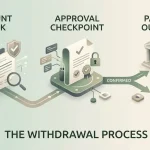
For real-money play, account checks are part of the process before funds can be deposited or gambling can begin. Under UK rules, an operator must verify a customer’s identity before either step. Verification is therefore not merely a later formality triggered by a withdrawal. An account that has not passed the required checks cannot proceed to deposits and play.
Under UK rules, an operator must verify a customer’s identity before funds can be deposited or gambling can begin.
Identity checks commonly involve a photograph of a passport or driving licence, together with a recent utility bill. These documents serve different purposes: photo identification supports an identity check, while a bill can help establish an address. The exact documents requested can depend on the account’s circumstances, but the practical point is that the details supplied during registration need to be capable of being matched to the evidence provided.
This makes accuracy at sign-up consequential. Inconsistent personal details can lead to additional questions or delay an account process, while clear, current documents are more readily assessed. Verification should be understood as an account-level control, not as a signal that a casino is necessarily reliable in every other respect. It establishes whether the operator has checked the account holder to the required standard; it does not by itself settle questions about limits, withdrawal handling or the terms attached to an offer.
Account limits and changes
Limits provide a way to control how much can be spent through an account. Their practical value depends not only on whether controls exist, but also on how changes take effect. A reduction applies immediately, whereas an increase is subject to a cooling-off delay. That distinction matters: lowering a limit can take effect without waiting, while raising it cannot be treated as an instant adjustment.
The different timing gives reductions and increases different functions. A lower limit can restrict further spending straight away; a higher one requires time to pass before it takes effect. This structure makes the direction of a change important when interpreting account controls. It also means that a displayed limit should not be assumed to change immediately in both directions.
Trusted Casinos Not on GamStop UK: What to Check
For someone assessing real-money account arrangements, clear presentation of the current limit and its status is more informative than a general statement that controls are available. The timing of any change affects what the control does in practice. Limit settings should also be distinguished from identity checks: one concerns account use, while the other establishes the customer’s identity before deposits or play.
Withdrawals and document checks
A withdrawal is a separate account event from making a deposit. In particular, a first withdrawal may involve scrutiny of documents, even where the account has previously been used. A specialist review reports that first-time withdrawals can incur an additional 12–24 hours for document checks. That is a report about a possible delay, not a guaranteed processing window for every account or operator.
The distinction between an operator’s document review and the time taken for the payment itself is important. A delay associated with checking documents does not, on its own, describe the complete path from a withdrawal request to funds arriving. Nor does the reported interval establish that later withdrawals will take the same time. It should be read narrowly: a first withdrawal may require an additional check, and the review’s stated interval concerns that check.
Where a withdrawal is pending, the account process may therefore involve more than the payment instruction itself. Identity or payment-ownership questions can arise as part of establishing that an account and its withdrawal request are in order. This is distinct from the initial requirement to verify before deposit or play: checks can be relevant at more than one stage, although the initial verification requirement remains in place regardless of whether a withdrawal is imminent.
Do
- Treat verification, account limits, and withdrawals as separate stages
- Use reductions to restrict spending immediately
- Account for document checks during first-time withdrawals
Don’t
- Confuse a reported processing interval with a guaranteed window
- Assume limit increases take effect instantly
- Treat verification as a later formality triggered only by withdrawal
A useful assessment of a real-money account separates three matters that are sometimes blurred together: verification before gambling, the effect of account limits, and the handling of a withdrawal. The first is a prerequisite under UK rules; the second depends on how reductions and increases take effect; the third can include document checks, especially at the first withdrawal. Treating these as separate stages gives a more precise account of what account-level safeguards do, without turning a single reported processing interval into a promise about every withdrawal.
What Public Register Records Can Reveal About Casino Sites
A public register entry can help establish which licensed operator is associated with a casino domain. That is more specific than a site’s branding: a familiar name on a homepage does not, by itself, identify the legal entity responsible for the service. For anyone assessing trusted casino sites in the UK, the useful question is whether a domain can be connected to an operator in the Gambling Commission’s records.
A specialist casino review reports that the UK Gambling Commission’s public register links 333casino.com to Grace Media (Gibraltar) Limited, under operator account 57869, as a White Label domain. The entry therefore provides a traceable association between the named website and a registered operator. It does not mean that the domain itself is a separate company or that every aspect of the casino has been assessed through that association.
The White Label designation matters because it indicates a relationship between a domain and an operator rather than simply presenting the consumer-facing brand as the licence holder. In practical terms, the operator name and account number are useful identifiers when comparing a website’s claims with the regulator’s record. A mismatch, or an inability to connect a domain with a relevant entry, would merit closer scrutiny; the record should not be replaced by a brand’s own description of its regulatory status.
Non-UK-Registered Casinos: Regulation and Risks
Register information is also time-sensitive. A recorded association describes what the register reports, not necessarily an unchanging arrangement. Domains, trading relationships and operator details may change, so an entry should be treated as a dated regulatory record rather than a permanent endorsement. A conclusion about a site’s current position depends on what the register shows when it is consulted.
The entry is not a complete assessment of consumer experience or conduct. It does not, on its own, establish that every promotion is clearly presented, that all customer interactions are satisfactory, or that the site is suitable for every player. Nor does a listed domain amount to a general ranking of the most trusted casino sites in the UK. It answers a narrower question: which operator does the record associate with this domain?
There is a further reason to keep the inference narrow. On 26 June 2025, the Gambling Commission imposed a £60,000 financial penalty on Grace Media for breaches involving self-exclusion and consent for direct electronic marketing. That enforcement record concerns the operator, not a finding that every product or interaction associated with every linked domain had the same defect. It does, however, show why the presence of a domain in a register should not be mistaken for a guarantee of flawless conduct. Regulatory status and an operator’s compliance history are distinct pieces of evidence.
A careful reading therefore separates three matters: the domain-to-operator link, the operator’s regulatory record, and the quality of the particular site’s practices. The public register can support the first and help locate the second. It cannot substitute for examining the relevant terms, customer safeguards or the circumstances of a particular complaint. A single register entry is evidence of an association, not a complete consumer review.
Attention: A domain’s presence in the public register does not guarantee flawless conduct or a lack of compliance history.
This distinction applies to claims about trusted slots, bonuses or payment options as much as to broader claims about casino sites. A domain’s connection to an operator does not establish that a particular bonus is fair, that a payment method is available on stated terms, or that an individual game is suitable. Those claims require evidence about the specific product or offer, not just the operator’s register status.
The strongest use of a register is therefore precise and limited: it can connect a named domain to an operator and provide identifiers for checking that relationship. For 333casino.com, the reported entry names Grace Media (Gibraltar) Limited and account 57869, with the domain classified as White Label. The enforcement penalty supplies separate context about that operator’s record. Neither point should be stretched into a blanket verdict on the site, but together they show why a domain-level record is more informative than a brand claim alone—and why it remains only one part of an assessment.
Assessing Claims About the Best Trusted Casinos
Calling a casino “trusted” is a broad judgement, not a regulatory category. A review may use the word to describe customer service, payment handling or a range of games, but those claims need evidence of their own. A regulator’s record can establish a narrower point: which operator and domain are associated in its published records. It cannot, by itself, substantiate every wider claim made about a site.
Casino Without a UK Licence: Regulation and Risks
The distinction matters when comparing claims about the best trusted casino in the UK. A ranking may combine measurable details with subjective assessments, and the label alone does not show how those assessments were made. Useful evidence is specific and checkable: for instance, an identified operator and a domain linked to that operator in the regulator’s records. Such a link is more informative than an unsupported assurance, but it should not be treated as a complete verdict on the casino.
The Gambling Commission’s published register lists LeoVegas Gaming PLC under operator account number 39198. Its domain register records leovegas.co.uk as an active UK-facing domain associated with that same account. Read together, these entries provide a concrete connection between a named operator and a domain. They do not establish that every service, promotion or customer experience associated with the brand is satisfactory, nor do they turn a promotional description such as “most trusted UK casinos” into a verified ranking.
A careful assessment therefore separates different kinds of evidence. A regulator’s record can support a claim about the operator-domain relationship at the time the record is consulted. A specialist review may offer observations about a particular site, but those observations remain the reviewer’s assessment rather than a regulatory finding. Customer comments can describe individual experiences; they do not necessarily establish how common those experiences are. These sources answer different questions and should not be treated as interchangeable.
The same caution applies to claims about trusted casino games in the UK. A game’s presence at a casino does not independently prove that the site as a whole meets every standard implied by a trust claim. Nor does a favourable review settle whether a domain is properly connected to the operator named in the regulator’s records. Each assertion needs evidence matched to what it actually says.
Regulatory Evidence
- A regulator’s record confirms the operator-domain relationship but not overall service quality
- Subjective labels like “best” or “trusted” require independent evidence
- Public register entries are time-sensitive and describe the status at the time of consultation
- Customer comments and specialist reviews answer different questions than regulatory records
A defensible comparison avoids treating “best” or “trusted” as facts in themselves. It identifies the precise claim, checks whether the evidence supports that claim, and keeps conclusions within those limits. A public register entry is a useful, verifiable detail in that process; it is not a substitute for assessing other claims separately. The register can also change, so its entry describes what is recorded when checked, rather than guaranteeing that every aspect of a site will remain unchanged.
Crypto Casinos and the Limits of What Can Be Verified
A casino’s acceptance of cryptocurrency is a payment feature, not evidence of its regulatory status. Bitcoin, stablecoins or another digital asset may appear in a site’s payment information, but that alone does not establish that the operator is authorised to provide gambling to customers in Great Britain. The relevant question is whether the business holds the required UKGC Licence for that activity.
This distinction matters when a site describes itself as trusted or presents its crypto options as a mark of reliability. Those claims concern different things. A payment method can indicate how an account may be funded, but it does not identify the operator’s licence or show that its services fall within the British regulatory system. Equally, a site’s use of familiar gambling products or professional-looking presentation cannot substitute for evidence of authorisation.
The licensing requirement applies to remote gambling offered to consumers in Great Britain even when the business is based elsewhere. A foreign address, an international customer base or cryptocurrency transactions do not, by themselves, remove that obligation. The payment technology does not change the regulatory test: the operator’s service to British customers is what matters.
Non-UK Regulated Casinos: UK Rules Explained
Claims about trusted crypto casinos therefore need to be separated into verifiable parts. The availability of a digital-asset payment option may be stated on an operator’s own pages, but that statement does not confirm that the payment works as described, which assets are accepted, or how transactions are handled. Nor does it verify that the operator is licensed. Each claim requires evidence suited to the claim being made.
The public register is the relevant place to establish whether an operator is licensed for the British market. A brand name alone may not make the connection clear, since the licensed entity can have a different legal name. The assessment should therefore connect the site and its operator with the register entry, rather than treating a crypto logo or a general “licensed” statement as sufficient proof. A register result establishes what is recorded there; it is not, by itself, a complete evaluation of every aspect of a casino’s service.
No general ranking of the most trusted crypto casinos follows from the presence of cryptocurrency payments. Without evidence linking particular sites to current authorisations and substantiating their payment claims, a “top” list would imply a level of verification that the payment feature cannot provide. Crypto acceptance and regulatory authorisation are separate questions, and evidence for one should not be treated as evidence for the other.
Great Britain and Northern Ireland: Different Regulatory Remits
The United Kingdom is not a single jurisdiction for every gambling-regulation question. The Gambling Commission’s remit under the Gambling Act 2005 covers Great Britain: England, Scotland and Wales. Northern Ireland is outside that Act’s scope and is not within the Commission’s remit for remote-gambling provision. A statement about a casino’s position under the UKGC regime therefore needs to be read in geographic context.
Geographic Remits
The Gambling Commission’s remit covers Great Britain (England, Scotland, and Wales), but does not extend to Northern Ireland.
This distinction matters when assessing claims that a casino is trusted across the UK. The presence of a UKGC licence concerns the operator’s provision of gambling to consumers in Great Britain; it does not, by itself, establish the regulatory position for Northern Ireland. Equally, the Commission’s lack of jurisdiction there should not be treated as a finding that an operator is either authorised or unauthorised under any separate Northern Ireland arrangements. Those are different questions.
The terminology can obscure the boundary. “UK” is often used broadly in casino descriptions, while “Great Britain” has a narrower and specific meaning in the Commission’s remit. A site may use UK-wide language, but that wording alone does not show which regulator’s rules apply to each part of the country. Regulatory claims are more precise when they identify the territory covered rather than relying on a general national label.
For a casino presented as serving British customers, evidence of a UKGC licence is relevant to its activity in England, Scotland and Wales. It should not be extended into a blanket conclusion about Northern Ireland. Conversely, the fact that Northern Ireland falls outside the UKGC’s remote-gambling remit does not change the Commission’s role in Great Britain. The two points can be true at once: the Commission regulates remote gambling offered to consumers in Great Britain, and Northern Ireland is not within that remit.
This geographic distinction also limits what a broad “trusted UK casino” claim can establish. Trust is not a regulatory status conferred by a label, and a regulator’s remit cannot be inferred from a site’s use of “UK” in its name or description. A careful assessment separates the operator’s position under the UKGC framework for Great Britain from any claim concerning Northern Ireland. Without that separation, language suggesting a single UK-wide regulatory status risks implying more than the evidence establishes.
VPN-Friendly Casinos in the UK: Access and Terms
The relevant question is therefore not simply whether a casino is described as British or UK-facing. It is which territory the regulatory statement concerns. Great Britain falls within the Gambling Commission’s remit under the 2005 Act; Northern Ireland does not fall within that same remit for remote gambling. This boundary should be kept explicit whenever UK-wide trust claims are evaluated.
Casino Reviews, Free Spins and Bonus Conditions
A casino review that calls an offer “generous” gives little basis for comparison unless it explains the terms attached to the bonus. The headline value is only one part of the offer: eligibility rules, wagering requirements, game contribution and expiry can determine whether bonus funds or free spins have practical value. A trusted casino review should distinguish what the promotion advertises from what its conditions require.
A specialist review describes a £20 bonus carrying 10x wagering as requiring £200 in total stakes before the wagering condition is met. That calculation is specific to the stated example, not a general rule for promotions. Reviews should make clear whether a wagering multiple applies to the bonus alone or to another amount, and whether the resulting stake requirement must be completed before any winnings can be withdrawn. Without those details, a prominent bonus figure can obscure the commitment attached to it.
Eligibility can narrow an offer further. A specialist review reports welcome deals limited to new customers, restricted to one per household, and potentially unavailable with some payment methods, including e-wallets. These are offer-specific conditions, rather than terms that can safely be assumed to apply to every casino. A review that reports only the advertised bonus, without stating who qualifies and what exclusions apply, may leave a materially incomplete impression.
Bonus Calculation
Step 1: Identify the bonus value
Establish the headline amount, such as a £20 bonus.
Step 2: Apply the wagering requirement
Multiply the bonus by the wagering multiple (e.g., £20 × 10x wagering).
Step 3: Calculate total stakes
Determine the total amount required to be staked (£200) before the condition is met.
Expiry terms also matter for both bonus funds and free spins. One specialist review places reported expiry periods within a range of 7 to 30 days. The applicable promotion’s own terms determine the actual deadline; a broad description in a review cannot replace them. If a review omits when the period begins or what must be completed before expiry, its account of the offer is incomplete.
Game contribution affects how quickly wagering can be completed. A specialist review reports that slots count in full towards wagering, while live tables and blackjack can count at a reduced rate or not count at all. The effect is that the same stated requirement may be harder to meet if excluded or lower-contribution games are used. Free spins may also have their own eligible games and conditions, so their value cannot be inferred from the number of spins alone.
Assessments of trusted UK casino reviews are therefore strongest when they separate verified offer terms from broad judgements about value. A clear account identifies eligibility, wagering calculation, game contribution and expiry without presenting a single promotion’s conditions as universal. Where those details are absent, the review’s positive description is not enough to establish what the offer delivers.
Casino Apps and the Rules That Still Apply
A casino app is a way to reach remote gambling, not a separate category in which ordinary account rules disappear. Its design, download route or branding does not change the point at which a customer must be checked. Under UK rules, verification has to take place before a person can deposit or play; operators must also establish a customer’s age before accepting a deposit.
Casino sites not registered with GamStop in the UK
That timing matters when assessing claims about a trusted casino app in the UK. A polished interface, an app-store listing or a quick registration screen is not evidence that the required checks have been completed. Nor does installing an app establish that an account is ready for real-money activity. The relevant question is whether the operator applies the required verification before gambling access begins, rather than allowing a deposit or play first and postponing checks until later.
The same distinction applies when an app is described as convenient or easy to use. Those are claims about the interface, not proof of compliance. Verification may form part of the route from registration to account use, but the essential boundary is clear: depositing and playing cannot precede the required checks. An app cannot create an exception simply by presenting gambling through a mobile screen rather than a website.
There is also a difference between age-related safeguards and a general endorsement of an app. Meeting the requirement to check age before a deposit does not, by itself, establish that every other aspect of an operator’s service is reliable. Conversely, an app’s appearance or popularity cannot replace evidence that the relevant checks occur at the required stage.
For comparisons, descriptions should therefore be read narrowly. Statements about navigation or mobile compatibility concern how a service works; statements about age verification concern a regulatory safeguard. Keeping those claims separate avoids treating an attractive app as proof of trustworthiness, while recognising that mobile access remains subject to the rules governing remote gambling.
Verification Timing
Depositing or playing must not precede the required identity and age checks under UK rules.
Bitcoin and Dogecoin Casinos: Regulatory Evidence
A casino’s reference to Bitcoin or Dogecoin describes a payment-related feature; it does not establish the operator’s regulatory status. The same distinction applies whether a site presents itself as a Bitcoin casino, accepts Dogecoin, or promotes both currencies. Neither the name of a cryptocurrency nor its appearance in payment information demonstrates that the business is authorised to provide gambling to customers in Great Britain.
The relevant test is whether the operator holds the required UK Gambling Commission licence for remote gambling offered to people in Great Britain. That requirement applies regardless of where the business is based. A company’s overseas location therefore does not remove the licensing obligation when it offers gambling facilities to this market.
This separates two claims that can otherwise be blurred together. One concerns whether a site says it accepts a particular cryptocurrency. The other concerns whether its operator is licensed to serve British customers. Evidence for the first does not establish the second. Likewise, a general statement about licensing rules cannot verify that a named casino accepts Bitcoin or Dogecoin, or that its stated payment arrangements operate as described.
Accordingly, claims about trusted Bitcoin or Dogecoin casinos in the UK require evidence about the specific operator and its authorisation, not simply a list of cryptocurrency names or a site’s own description of its payment options. Without a confirmed connection between a casino and a relevant UKGC Licence, the cryptocurrency label cannot support a conclusion that the service is regulated for Great Britain.
This does not mean that the currency itself determines whether a gambling service is authorised. The regulatory question concerns the operator and the gambling facilities it offers to consumers in Great Britain. Payment claims and licensing claims should therefore be assessed separately, with the latter grounded in evidence of the operator’s licence. A cryptocurrency feature, on its own, is not evidence of that licence.
Casino Safety: Licensing and UK Casino Sites
Live Dealer Play, E-Wallets and Payment Processing
Live dealer games do not make payment processing a separate category. A deposit method and a withdrawal method may have different conditions, and the time taken for a payout can depend on both the operator’s processing and the payment route. Accordingly, a stated processing time should not be treated as a guaranteed arrival time.
A specialist review described welcome offers as often being restricted to new customers and one per household, with some payment methods, including e-wallets, excluded. That is a report about offer terms, not a rule applying to every casino. The relevant promotion conditions should specify whether an e-wallet deposit qualifies and whether the method can be used for withdrawals. Deposit and withdrawal availability are separate.
The same review reported PayPal withdrawals clearing in four to six hours on weekdays, compared with eight to ten hours from Friday to Sunday. These figures describe the timings reported in that review; they do not establish a standard for all operators or guarantee when funds will reach an account. A separate payment route may involve a different processing period.
Merkur Casino Online UK: Games, Demos and Checks
For debit card withdrawals, a specialist review reported a typical wait of two to three banking days after the operator’s review. The operator’s processing stage therefore matters alongside the card route. If a payout is pending, the distinction between an operator review and subsequent payment processing can help explain why a displayed withdrawal status may not mean that funds have arrived.
Payment restrictions also apply regardless of whether the game is a live table or a slot. UK-licensed casinos cannot accept credit cards for gambling, including credit-card funding routed through a money service business. They cannot accept wallet payments where the wallet permits credit-card funds to be used for gambling. An e-wallet label alone does not establish that a payment is eligible for a promotion or permitted for gambling; the wallet’s funding source and the operator’s stated terms matter.
For live dealer play, the relevant comparison is therefore not simply whether a casino offers an e-wallet. It is whether the payment route is available for the intended transaction, how its processing is described, and whether any offer conditions alter its eligibility.
Casino Safety

Anjouan Casino Licence in the UK: What It Means
Anjouan authorisation does not replace a UK Gambling Commission licence for gambling services supplied in...

Foreign Casinos for UK Players: How They Work
A practical explanation of how non-UKGC sites operate, what offshore licensing means, and where British...

International Casinos for UK Players: Licensing Guide
The guide explains how UK licensing affects access and protection, and what to weigh across...

Offshore Casino Sites in the UK: Licensing Explained
The guide distinguishes operators outside UKGC licensing from overseas-based firms that hold a UK licence,...

Offshore casinos for UK players: how to assess sites
In the UK market, offshore means accepting British customers without a UKGC licence—not simply operating...

British Casinos Not on GamStop: Rules and Risks
The guide distinguishes UKGC-regulated sites from casinos outside GamStop and examines licensing, bonus terms, safeguards...

Casino sites not registered with GamStop in the UK
GamStop participation follows UKGC licensing, while a casino’s branding or game range does not establish...

Non-UK Licence Casinos: Regulation and UK Rules
Licensing depends on the regulator and the markets an operator is authorised to serve, not...

Casino Without a UK Licence: Regulation and Risks
A foreign gambling licence does not provide UKGC oversight or establish the protections available to...

Casinos That Bypass GamStop: Risks and Limits
GamStop’s reach, offshore licensing and reported workarounds raise distinct questions about protection, access and risk....

Curaçao Casino Licence UK: What It Means
A Curaçao licence identifies an offshore licensing framework, but does not by itself show that...

Gibraltar Casino Licence and UK Gambling Rules
A Gibraltar licence concerns an operator’s status there; serving customers in Great Britain requires separate...

Merkur Casino Online UK: Games, Demos and Checks
Merkur may name a game provider, a casino brand or a venue, so operator identity...

Most Trustworthy Online Casinos in the UK: Key Checks
A practical framework for weighing UKGC oversight, operator records, GAMSTOP claims and real-money terms without...

Non-Gamban Casinos in the UK: Self-Exclusion Explained
GAMSTOP coverage, direct site exclusions and the limits of labels clarify how UK online self-exclusion...

Non-GamStop Curaçao Casino Sites: UK Context
A Curaçao licence claim does not establish UK authorisation or whether a casino is covered...

Non-GamStop European Casinos and UK Self-Exclusion
GAMSTOP covers participating licensed online operators, while a request to one casino applies to that...

Non-UK-Registered Casinos: Regulation and Risks
The guide explains how UK law, GamStop access, payment conditions and licensing differ across casinos...

Non-UK Regulated Casinos: UK Rules Explained
A casino may hold a licence abroad, but that does not make it UK-regulated or...

Non-UKGC Licensed Casinos: Regulation and Risks
Non-UKGC describes a casino’s relationship with the British regulator, not whether it holds a licence...

Malta MGA Licence for Online Casinos: UK Rules
An MGA licence indicates status within Malta’s framework, but does not establish permission to offer...

Online slots not on GamStop: what the label means
The term describes a casino’s connection to GamStop, not a distinct slot format or game...

Safe Online Casinos in the UK: What to Check
A practical guide to UK licensing, account and payment checks, safer-gambling controls, and the limits...

Trusted Casinos Not on GamStop UK: What to Check
A closer look at licensing disclosures, player safeguards and site checks—and what they cannot establish...

USA Casinos for UK Players: What the Label Means
The label alone does not show where an operator is based, who licenses it or...

VPN-Friendly Casinos in the UK: Access and Terms
A VPN routes a connection through another server, but it does not guarantee account acceptance...